Grand Fir
Abies grandis (Dougl. ex D. Don) Lindl. · Softwood · North America
Properties
| Janka hardness | 490 lbf (2,180 N) |
|---|---|
| Average dried weight (est.) | 23 lb/ft³ (370 kg/m³) |
| Specific gravity | 0.37 |
| Modulus of rupture | 8,900 psi (61.4 MPa) |
| Modulus of elasticity | 1.57 million psi (10.83 GPa) |
| Crushing strength | 5,290 psi (36.5 MPa) |
| Shrinkage — radial | 3.4% |
| Shrinkage — tangential | 7.5% |
| Shrinkage — volumetric | 11.0% |
| Shrinkage T/R ratio | 2.2 |
Values at 12% moisture content, clear-wood averages. Source: USDA Forest Products Laboratory, Wood Handbook FPL-GTR-282 (2021), Table 5–3b p. 5–12; shrinkage Table 4–3 p. 4–8.
Grand fir is a western true fir (specific gravity 0.37, Janka hardness 490 lbf) whose wood cannot be separated from the other western firs by examination. Its lumber goes mainly into building construction, boxes and crates, planing-mill products, and general millwork.
Appearance & grain
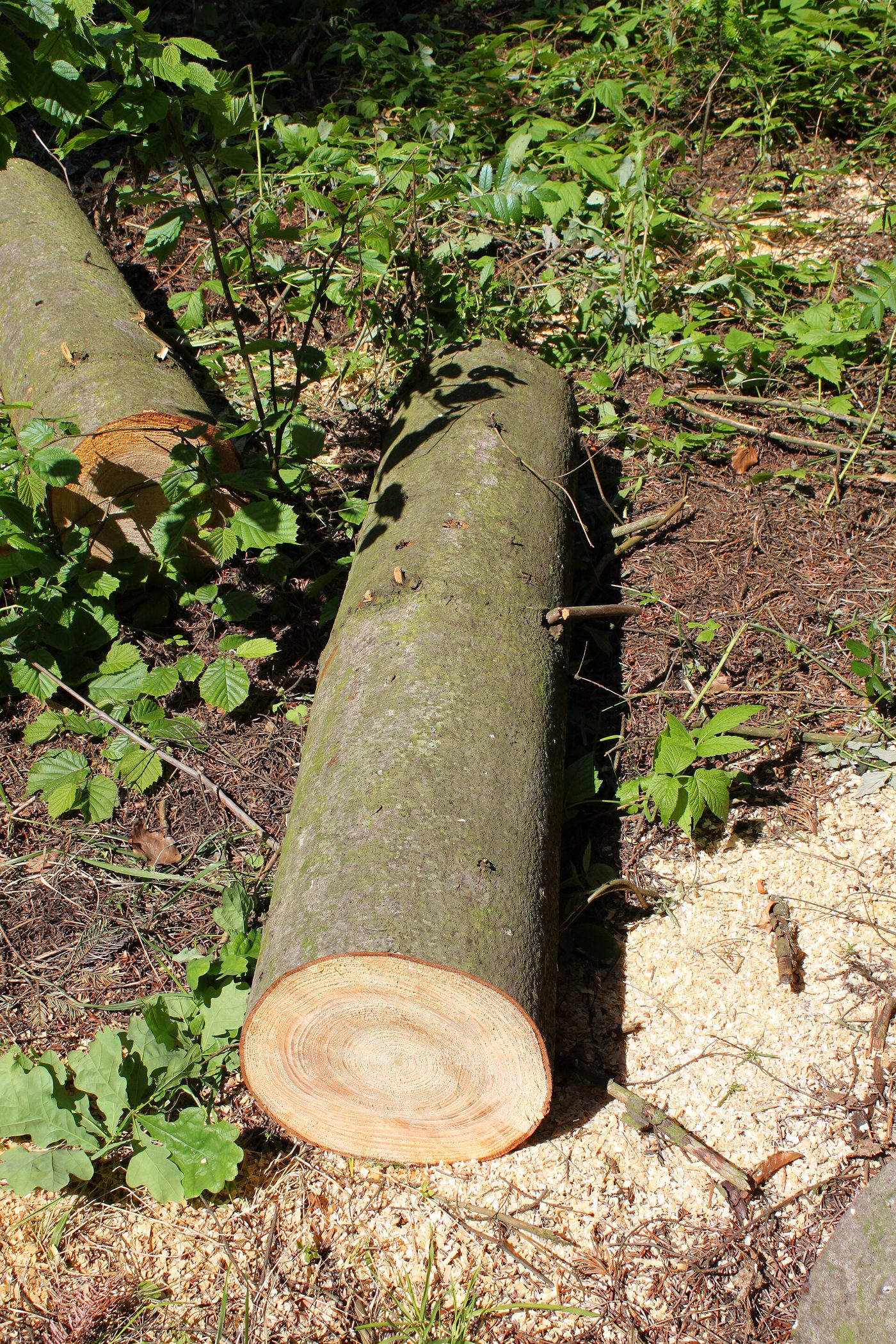
Grand fir's wood resembles the eastern true firs, as do the other western true firs: light in weight and pale in color. The Handbook treats the western firs as a group because their woods are not distinguishable.
Workability
The western true firs are somewhat higher in strength than balsam fir, subalpine fir excepted, and their shrinkage runs from low to moderately high. Grand fir's own bending strength, 8,900 psi, is the lowest of the three western firs in this directory.
Common uses
- Building construction
- Boxes and crates
- Planing-mill products
- Sashes
- Doors
- General millwork
Conservation: IUCN Red List: Least Concern (checked 2026-10-24).
Work with Grand Fir
Similar woods
Photo: Crusier · CC BY-SA 3.0 (source)
Property data: USDA Forest Products Laboratory, Wood Handbook — Wood as an Engineering Material, FPL-GTR-282 (2021).