Western Red Cedar
Thuja plicata Donn ex D. Don · Softwood · North America
Properties
| Janka hardness | 350 lbf (1,557 N) |
|---|---|
| Average dried weight (est.) | 20 lb/ft³ (320 kg/m³) |
| Specific gravity | 0.32 |
| Modulus of rupture | 7,500 psi (51.7 MPa) |
| Modulus of elasticity | 1.11 million psi (7.65 GPa) |
| Crushing strength | 4,560 psi (31.4 MPa) |
| Shrinkage — radial | 2.4% |
| Shrinkage — tangential | 5.0% |
| Shrinkage — volumetric | 6.8% |
| Shrinkage T/R ratio | 2.1 |
Values at 12% moisture content, clear-wood averages. Source: USDA Forest Products Laboratory, Wood Handbook FPL-GTR-282 (2021), Table 5–3b p. 5–12; shrinkage Table 4–3 p. 4–8.
Western redcedar (Thuja plicata) is the lightweight, decay-resistant softwood of the Pacific Northwest coast (specific gravity 0.32, Janka hardness 350 lbf), produced principally in Washington, followed by Oregon, Idaho, and Montana. It is listed as Least Concern on the IUCN Red List and is not listed in the CITES Appendices.
Appearance & grain
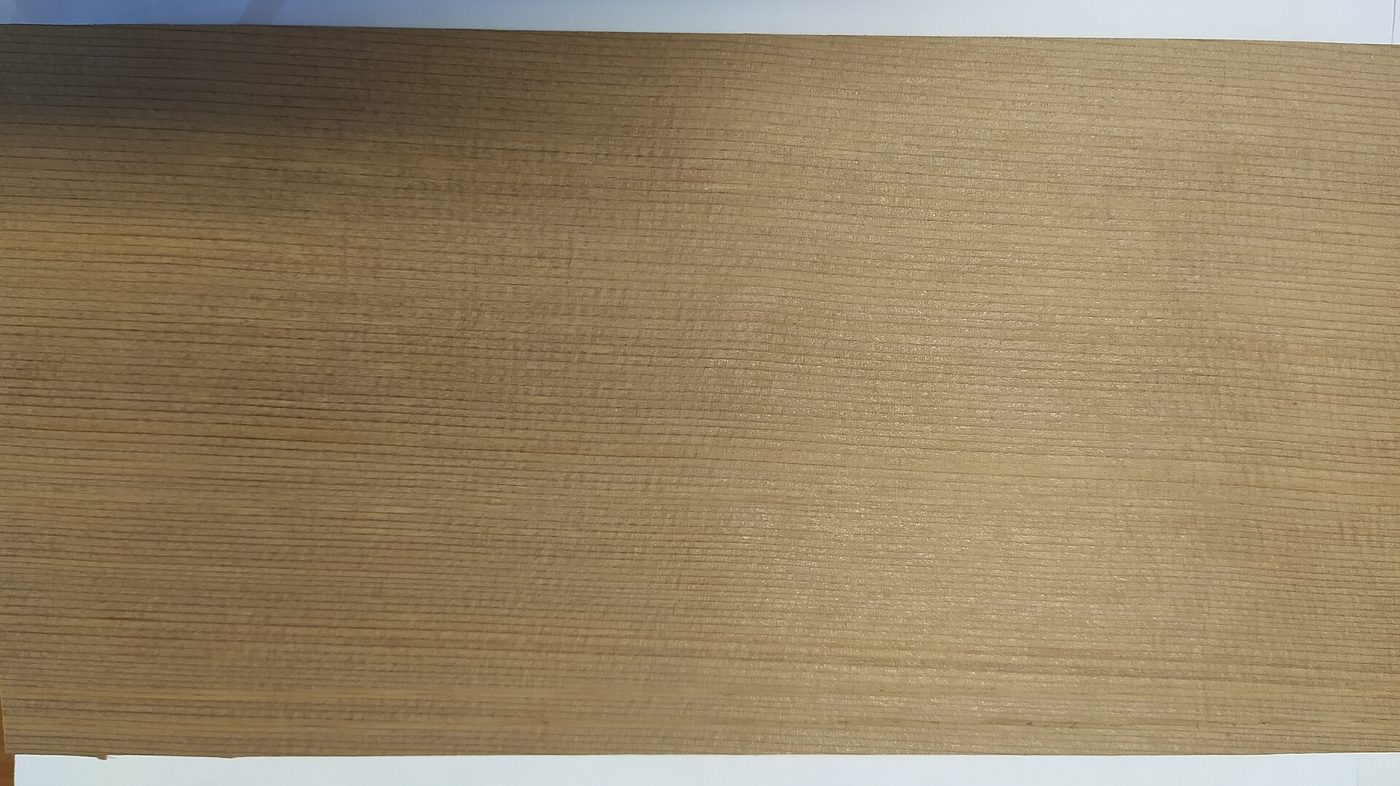
The heartwood is reddish or pinkish brown to dull brown, and the nearly white sapwood is narrow — often not more than 3 cm (1 in.) wide. The wood is generally straight grained, with a uniform but rather coarse texture.
Durability
The Handbook rates western redcedar heartwood as very resistant to decay — the property behind its long outdoor service life in shingles and siding.
Workability
The Handbook describes a lightweight, moderately soft wood with very low shrinkage that is low in strength when used as beams or posts and low in shock resistance — best specified where durability and stability matter more than load-bearing strength.
Common uses
- Shingles
- Lumber
- Poles
- Posts
- Piles
- Exterior siding
- Decking
- Interior woodwork
Conservation: IUCN Red List: Least Concern (checked 2026-10-25).
Work with Western Red Cedar
Similar woods
Related reading: Read our western red cedar lumber guide