American Chestnut
Castanea dentata · Hardwood · North America
Properties
| Janka hardness | 540 lbf (2,402 N) |
|---|---|
| Average dried weight (est.) | 27 lb/ft³ (430 kg/m³) |
| Specific gravity | 0.43 |
| Modulus of rupture | 8,600 psi (59.3 MPa) |
| Modulus of elasticity | 1.23 million psi (8.48 GPa) |
| Crushing strength | 5,320 psi (36.7 MPa) |
| Shrinkage — radial | 3.4% |
| Shrinkage — tangential | 6.7% |
| Shrinkage — volumetric | 11.6% |
| Shrinkage T/R ratio | 2.0 |
Values at 12% moisture content, clear-wood averages. Source: USDA Forest Products Laboratory, Wood Handbook FPL-GTR-282 (2021), Table 5–3b p. 5–9; shrinkage Table 4–3 p. 4–8.
American chestnut was once a major eastern hardwood, but chestnut blight killed practically all of the standing trees, so the lumber supply today comes mostly from salvaged timbers. That salvaged wood — much of it sold as wormy chestnut — is used mainly for paneling, interior woodwork, and picture frames.
Appearance & grain
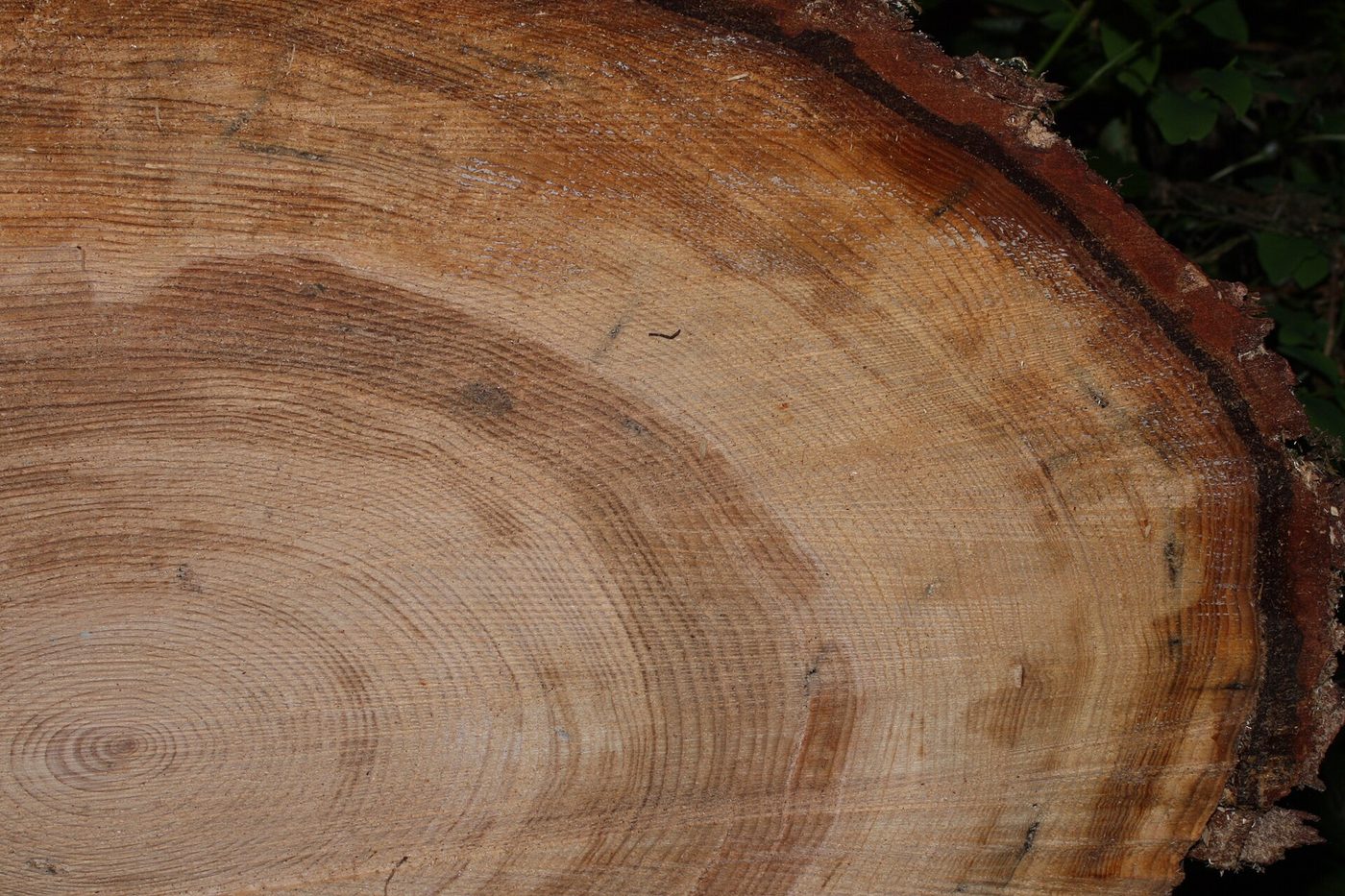
The heartwood is grayish brown to brown and darkens with age, while the sapwood is very narrow and almost white. The texture is coarse, and the growth rings are conspicuous because of the rows of large pores at the start of each year's growth.
Durability
Rated resistant to decay — the heartwood's natural durability let standing dead trees yield sound lumber for decades after the blight.
Workability
Chestnut dries well and is easy to work with tools. It is moderately light in weight and moderately hard, moderately low in strength and shock resistance, and low in stiffness.
Common uses
- Paneling
- Interior woodwork
- Picture frames
- Furniture
- Poles
- Railroad crossties
- Caskets
- Boxes
- Crates
- Shingles
- Veneer corestock
Conservation: IUCN Red List: Critically Endangered (checked 2026-10-24).