Bigtooth Aspen
Populus grandidentata · Hardwood · North America
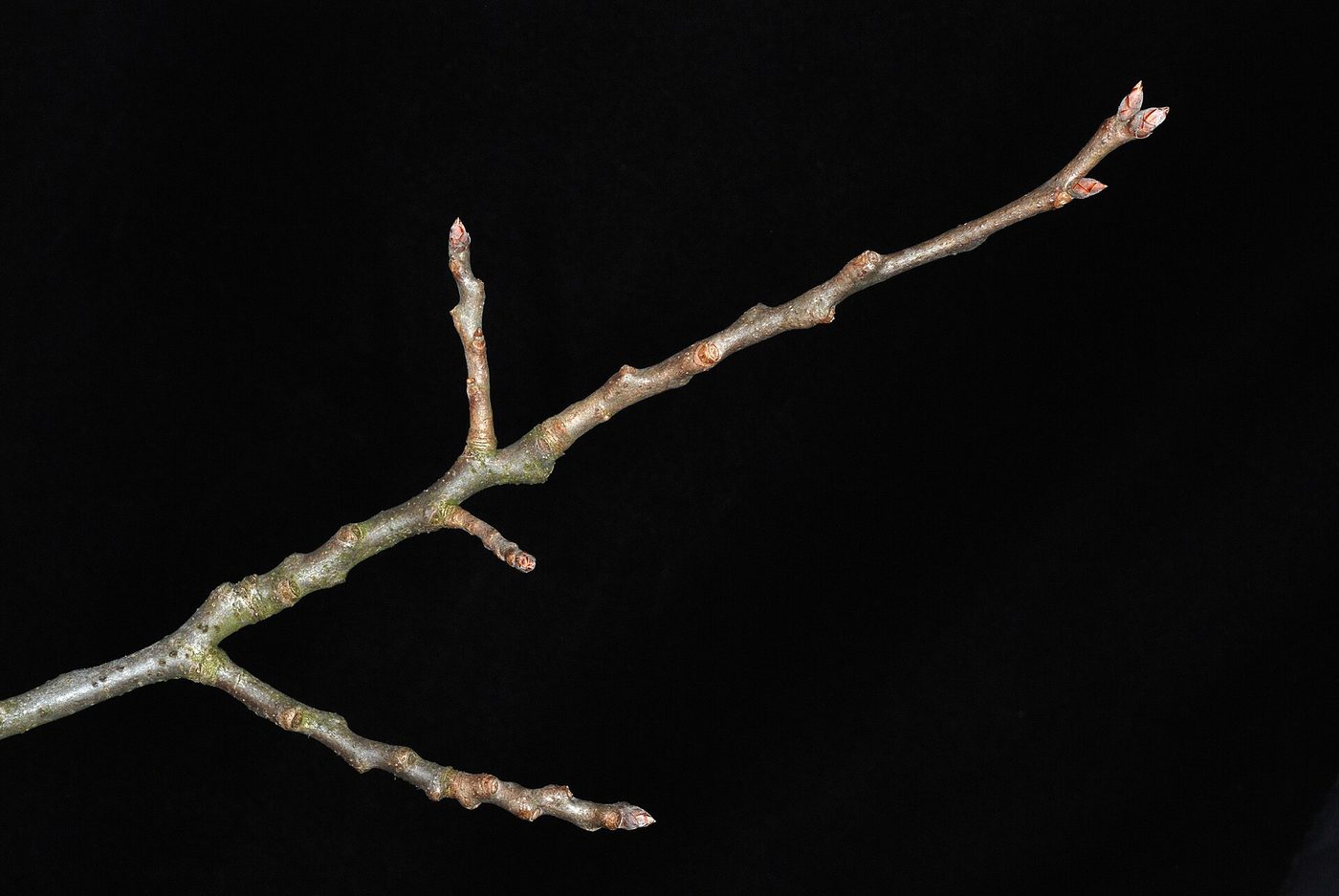
Properties
| Average dried weight (est.) | 24 lb/ft³ (390 kg/m³) |
|---|---|
| Specific gravity | 0.39 |
| Modulus of rupture | 9,100 psi (62.7 MPa) |
| Modulus of elasticity | 1.43 million psi (9.86 GPa) |
| Crushing strength | 5,300 psi (36.5 MPa) |
| Shrinkage — radial | 3.3% |
| Shrinkage — tangential | 7.9% |
| Shrinkage — volumetric | 11.8% |
| Shrinkage T/R ratio | 2.4 |
Values at 12% moisture content, clear-wood averages. Source: USDA Forest Products Laboratory, Wood Handbook FPL-GTR-282 (2021), Table 5–3b p. 5–9; shrinkage Table 4–3 p. 4–8.
Bigtooth aspen is one of the two eastern aspens whose light, soft wood is cut and sold interchangeably with quaking aspen. It goes mainly into lumber, pallets, boxes and crating, pulpwood, and strand panels.
Appearance & grain
The heartwood is grayish white to light grayish brown, and the sapwood is lighter colored, merging gradually into the heartwood without clear marking. The wood is usually straight grained and has a fine, uniform texture.
Workability
Aspen is easily worked, and well-dried lumber imparts no odor or flavor to foodstuffs packed in it. The wood is lightweight and soft, low in strength, moderately stiff, moderately low in shock resistance, and moderately high in shrinkage.
Common uses
- Lumber
- Pallets
- Boxes and crating
- Pulpwood
- Particleboard
- Strand panels
- Excelsior
- Matches
- Veneer
- Turned articles
Conservation: IUCN Red List: Least Concern (checked 2026-10-24).
Work with Bigtooth Aspen
Similar woods
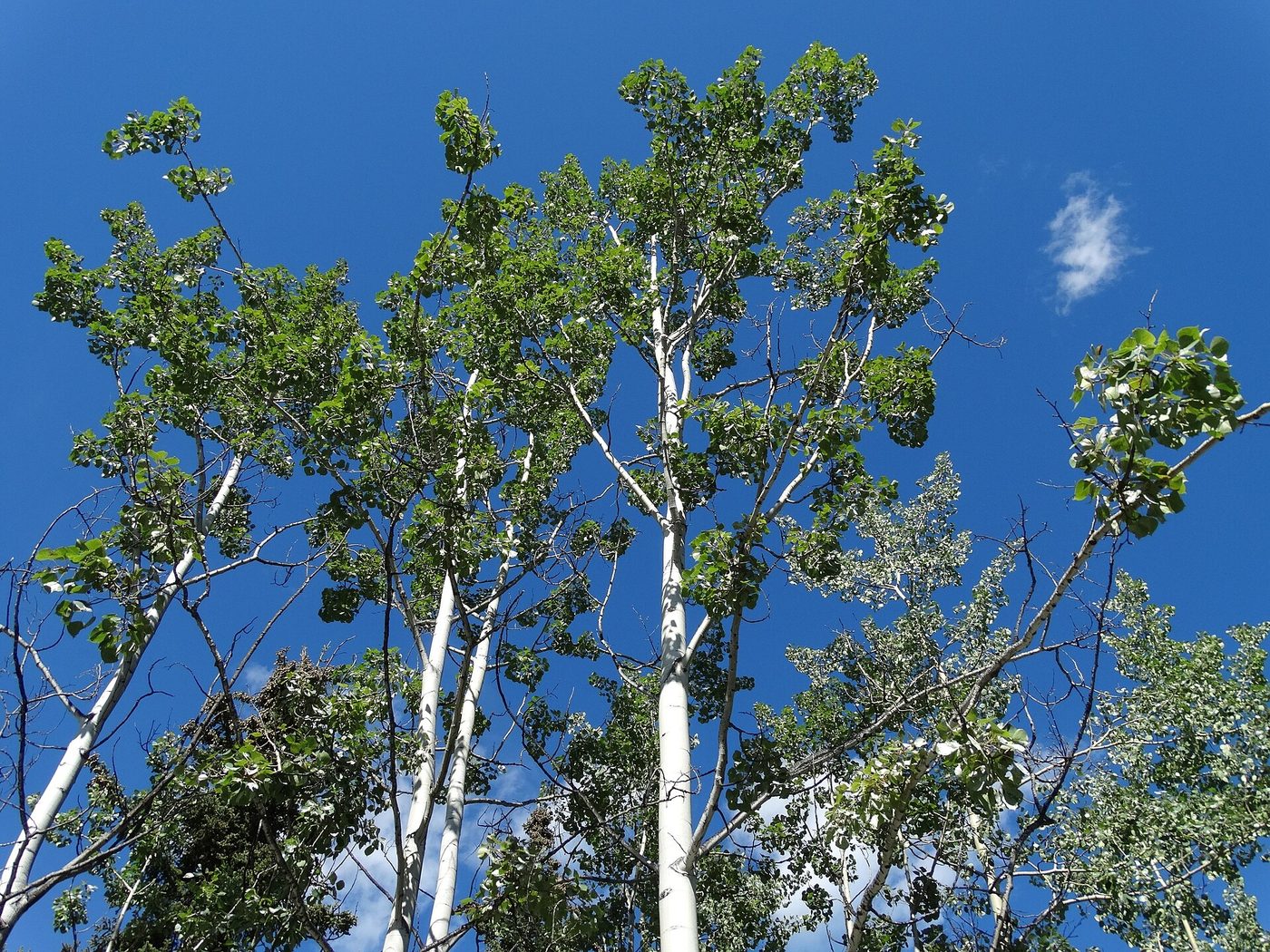
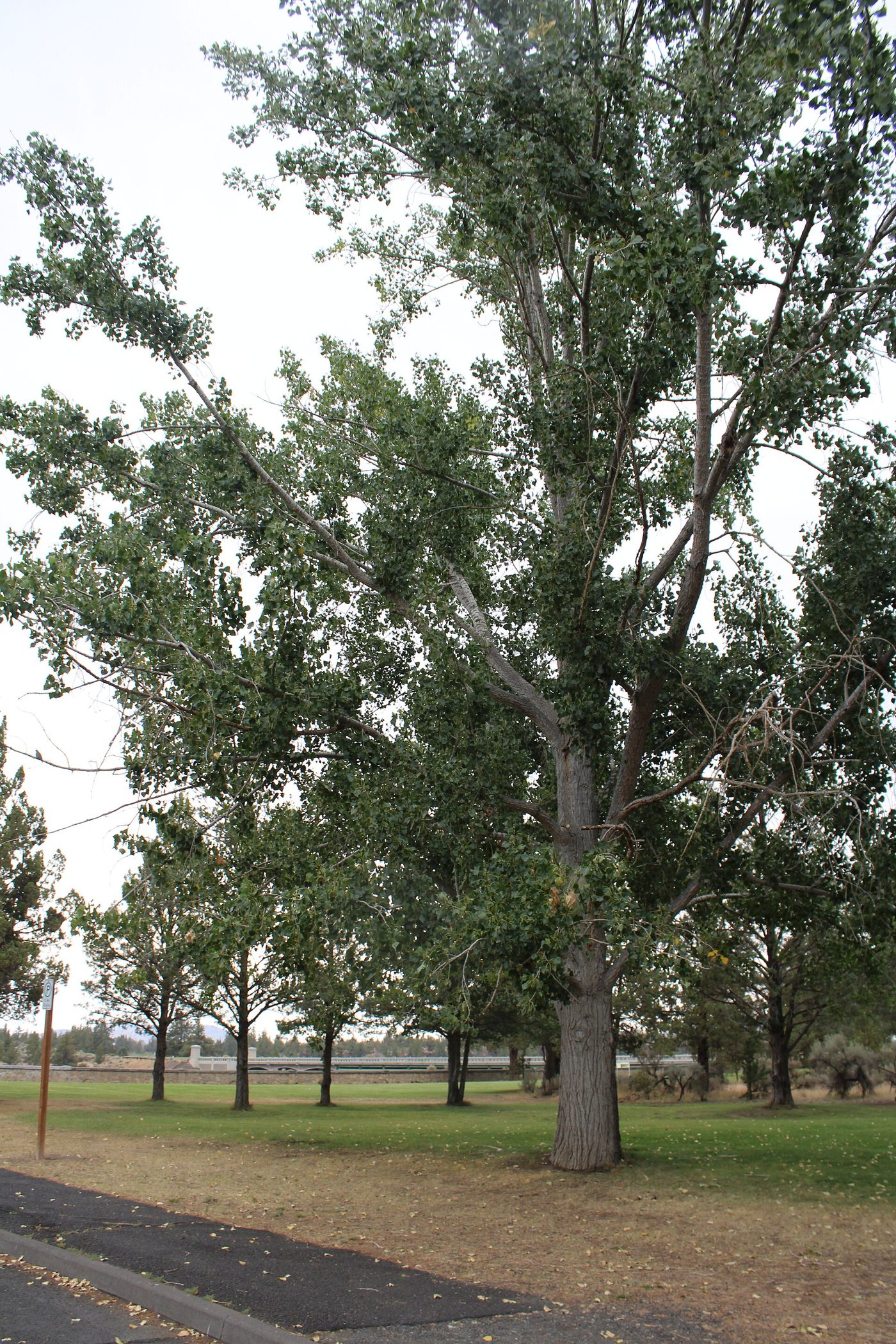
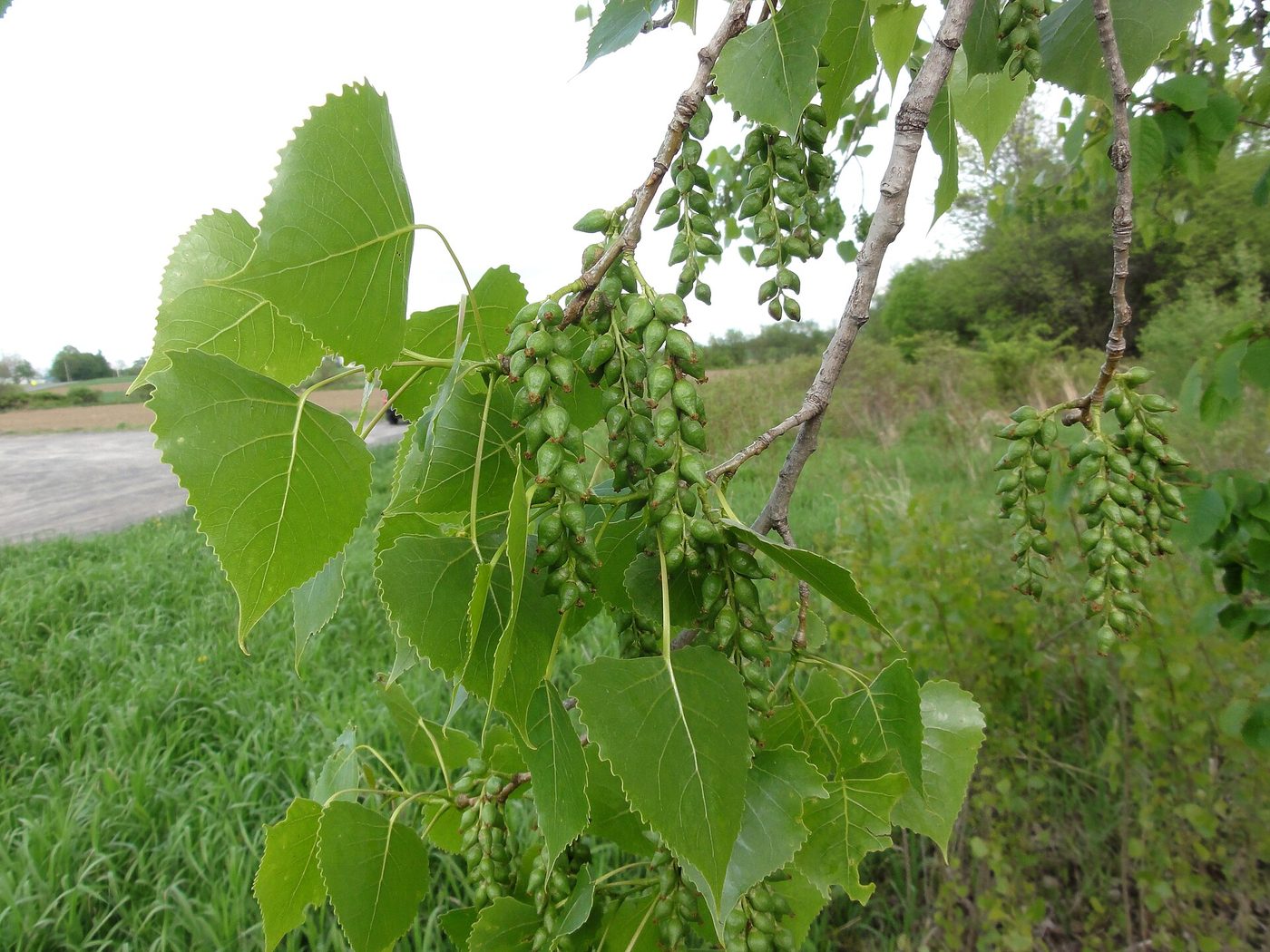
Photo: DouglasGoldman · CC BY-SA 4.0 (source)
Property data: USDA Forest Products Laboratory, Wood Handbook — Wood as an Engineering Material, FPL-GTR-282 (2021).