Black Ash
Fraxinus nigra · Hardwood · North America
Properties
| Janka hardness | 850 lbf (3,781 N) |
|---|---|
| Average dried weight (est.) | 31 lb/ft³ (490 kg/m³) |
| Specific gravity | 0.49 |
| Modulus of rupture | 12,600 psi (86.9 MPa) |
| Modulus of elasticity | 1.60 million psi (11.03 GPa) |
| Crushing strength | 5,970 psi (41.2 MPa) |
| Shrinkage — radial | 5.0% |
| Shrinkage — tangential | 7.8% |
| Shrinkage — volumetric | 15.2% |
| Shrinkage T/R ratio | 1.6 |
Values at 12% moisture content, clear-wood averages. Source: USDA Forest Products Laboratory, Wood Handbook FPL-GTR-282 (2021), Table 5–3b p. 5–9; shrinkage Table 4–3 p. 4–8.
Black ash belongs to the black ash group, the lighter of the two commercial ash groups (specific gravity 0.49, Janka hardness 850 lbf). Its wood goes into decorative veneer, cabinets, millwork, furniture, and cooperage.
Appearance & grain
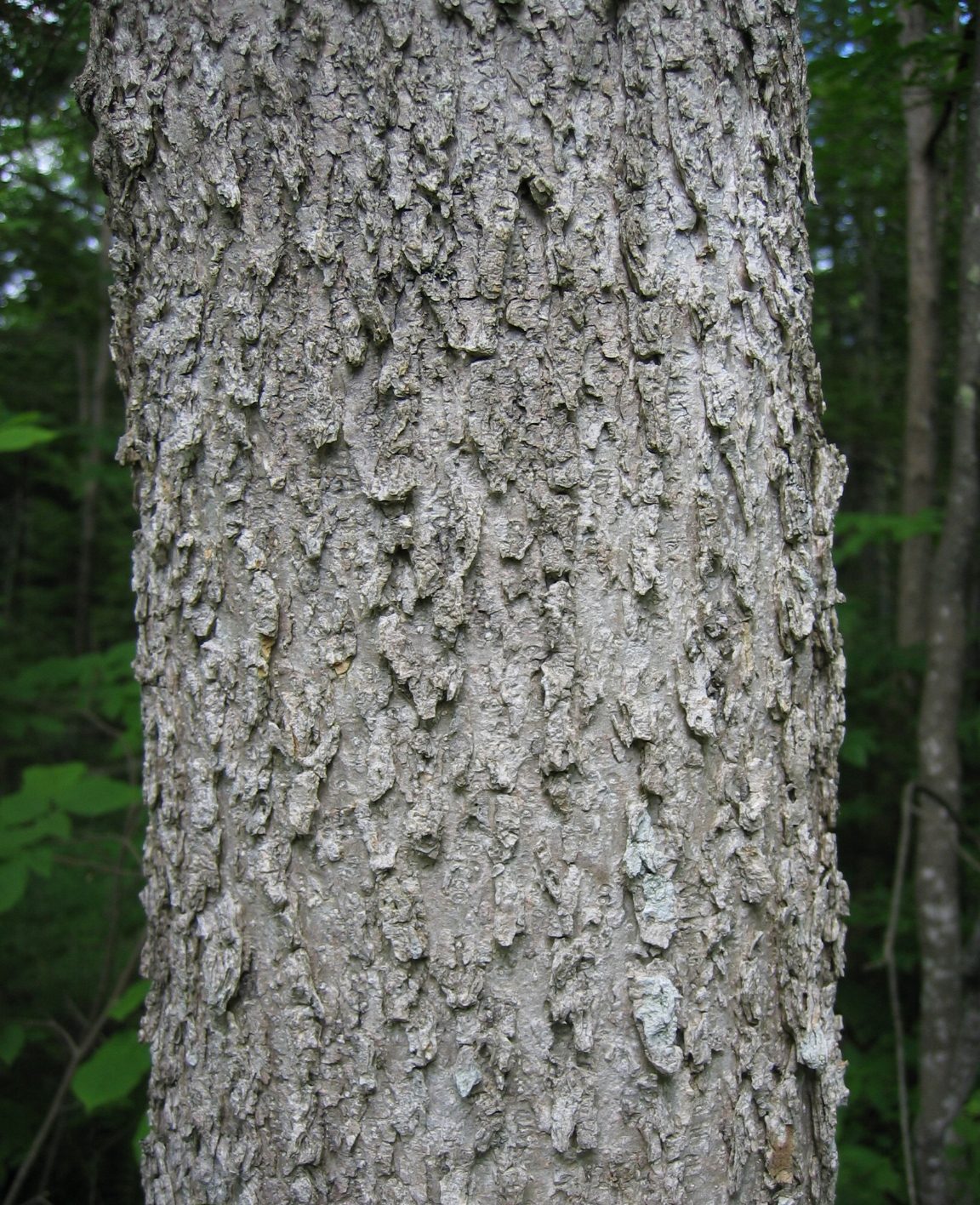
The heartwood is a darker brown than white ash's. The sapwood is light colored to nearly white. As a group, the black ashes run lighter in weight than the white ash group.
Workability
The Handbook treats black ash within its group, which is lighter in weight than the white ash group. Its bending strength of 12,600 psi sits well below white ash's 15,400 psi.
Common uses
- Decorative veneer
- Cabinets
- Millwork
- Furniture
- Cooperage
- Crates
Conservation: IUCN Red List: Critically Endangered (checked 2026-10-24).
Work with Black Ash
Similar woods
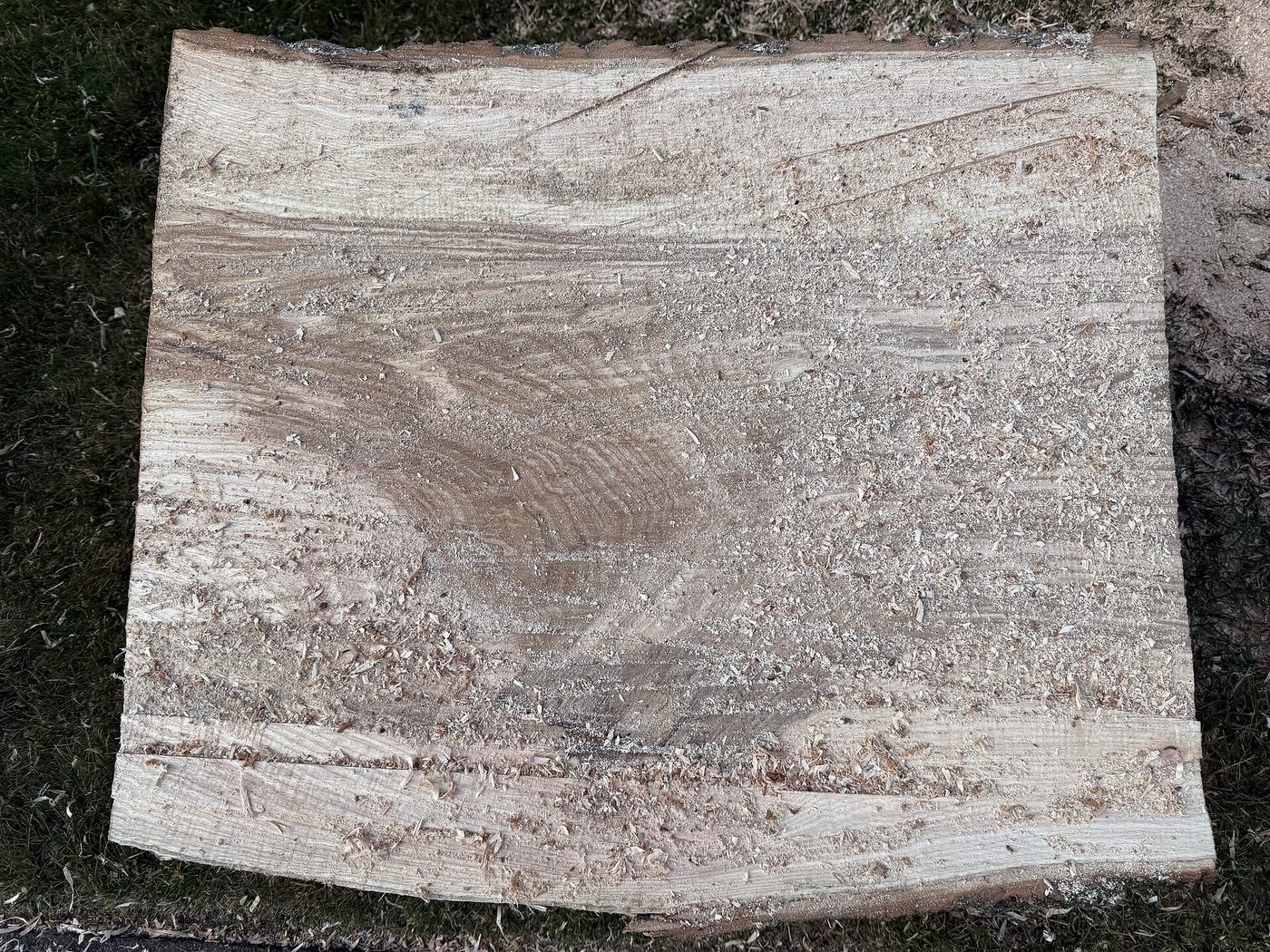
Photo: Keith Kanoti, Maine Forest Service, USA · CC BY 3.0 us (source)
Property data: USDA Forest Products Laboratory, Wood Handbook — Wood as an Engineering Material, FPL-GTR-282 (2021).