Eastern white pine
Pinus strobus L. · Softwood · North America
Properties
| Janka hardness | 380 lbf (1,690 N) |
|---|---|
| Average dried weight (est.) | 22 lb/ft³ (350 kg/m³) |
| Specific gravity | 0.35 |
| Modulus of rupture | 8,600 psi (59.3 MPa) |
| Modulus of elasticity | 1.24 million psi (8.55 GPa) |
| Crushing strength | 4,800 psi (33.1 MPa) |
| Shrinkage — radial | 2.1% |
| Shrinkage — tangential | 6.1% |
| Shrinkage — volumetric | 8.2% |
| Shrinkage T/R ratio | 2.9 |
Values at 12% moisture content, clear-wood averages. Source: USDA Forest Products Laboratory, Wood Handbook FPL-GTR-282 (2021), Table 5-3 p. 5-12; shrinkage Table 4-3 p. 4-8.
Eastern white pine ranges from Maine to northern Georgia and the Great Lakes, with about half of production from New England. It is a lightweight, stable, easy-working wood converted practically entirely to lumber.
Appearance & grain
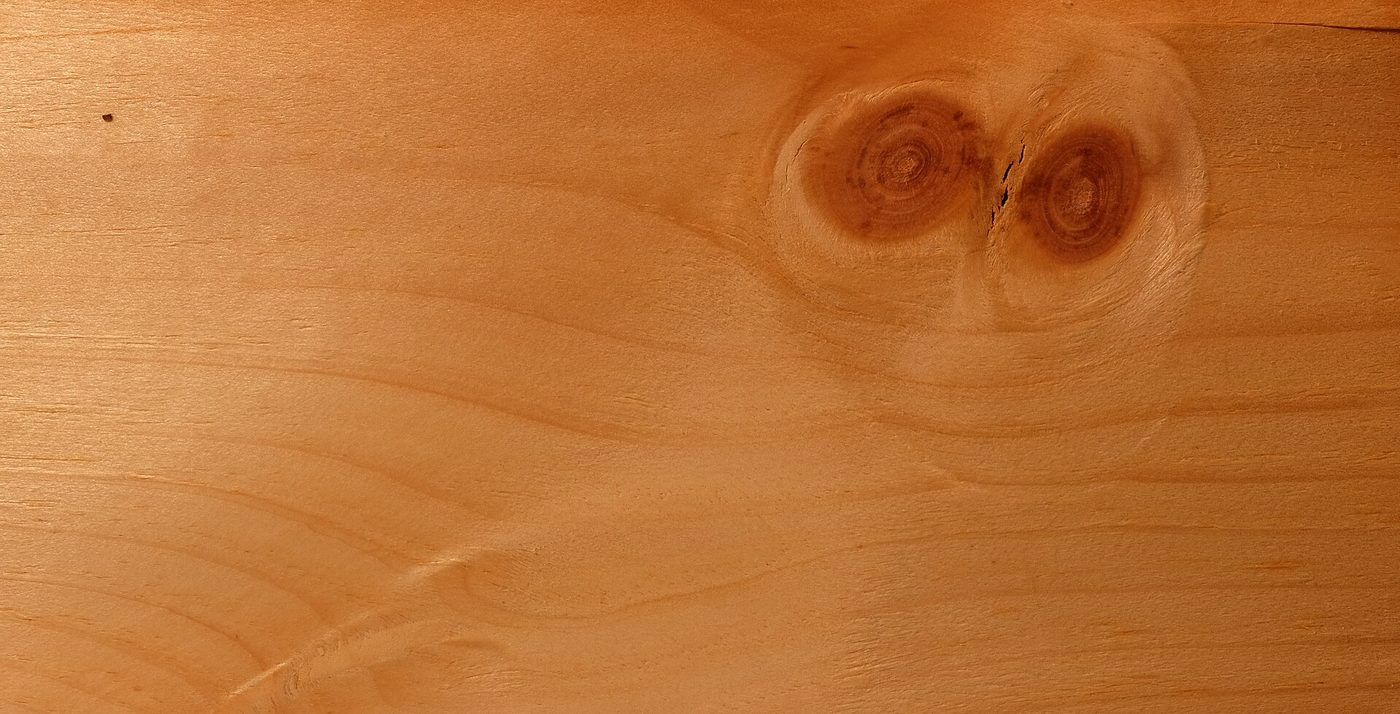
The heartwood is light brown, often with a reddish tinge, and darkens on exposure to air. The texture is comparatively uniform and the grain straight.
Workability
The wood is easily kiln dried, has low shrinkage, and ranks high in stability in service. It is easy to work and readily glued, though it is moderately soft, with moderately low strength and low shock resistance and stiffness.
Common uses
- Structural lumber
- Patterns
- Sashes and doors
- Furniture
- Interior woodwork
- Knotty paneling
- Caskets
- Shade and map rollers
- Toys
Conservation: IUCN Red List: Least Concern (checked 2026-10-24).
Work with Eastern white pine
Similar woods
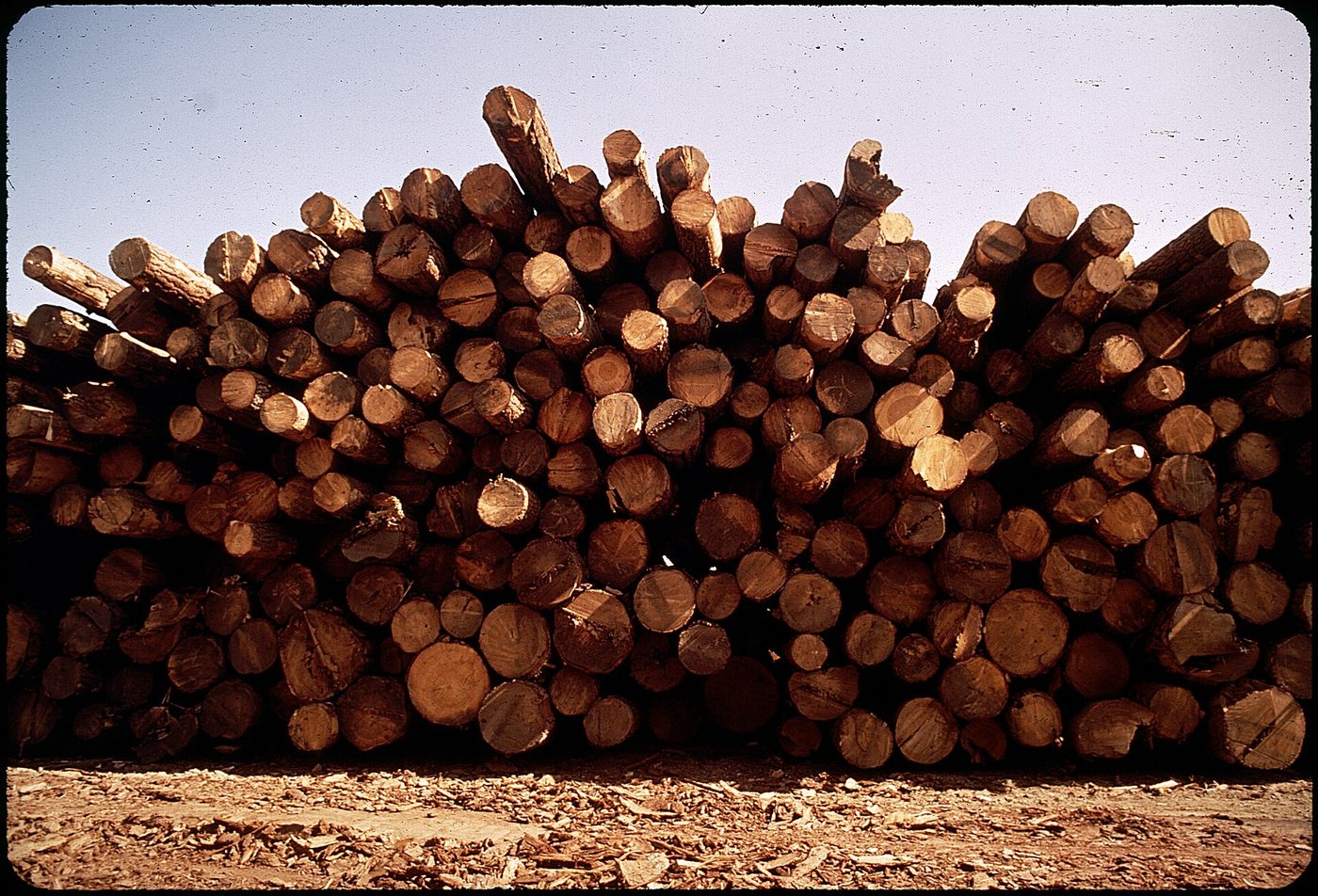
Photo: Not credited on Wikimedia Commons · CC BY-SA 3.0 (source)
Property data: USDA Forest Products Laboratory, Wood Handbook — Wood as an Engineering Material, FPL-GTR-282 (2021).