Rock Elm
Ulmus thomasii · Hardwood · North America
Properties
| Janka hardness | 1,320 lbf (5,871 N) |
|---|---|
| Average dried weight (est.) | 39 lb/ft³ (630 kg/m³) |
| Specific gravity | 0.63 |
| Modulus of rupture | 14,800 psi (102.0 MPa) |
| Modulus of elasticity | 1.54 million psi (10.62 GPa) |
| Crushing strength | 7,050 psi (48.6 MPa) |
| Shrinkage — radial | 4.8% |
| Shrinkage — tangential | 8.1% |
| Shrinkage — volumetric | 14.9% |
| Shrinkage T/R ratio | 1.7 |
Values at 12% moisture content, clear-wood averages. Source: USDA Forest Products Laboratory, Wood Handbook FPL-GTR-282 (2021), Table 5–3b p. 5–9; shrinkage Table 4–3 p. 4–8.
Rock elm is the strong end of the elm group (specific gravity 0.63, Table 5-3b Janka hardness 1,320 lbf), a hard elm chosen where bending strength and toughness matter. Today it goes mostly into furniture and decorative panels.
Appearance & grain
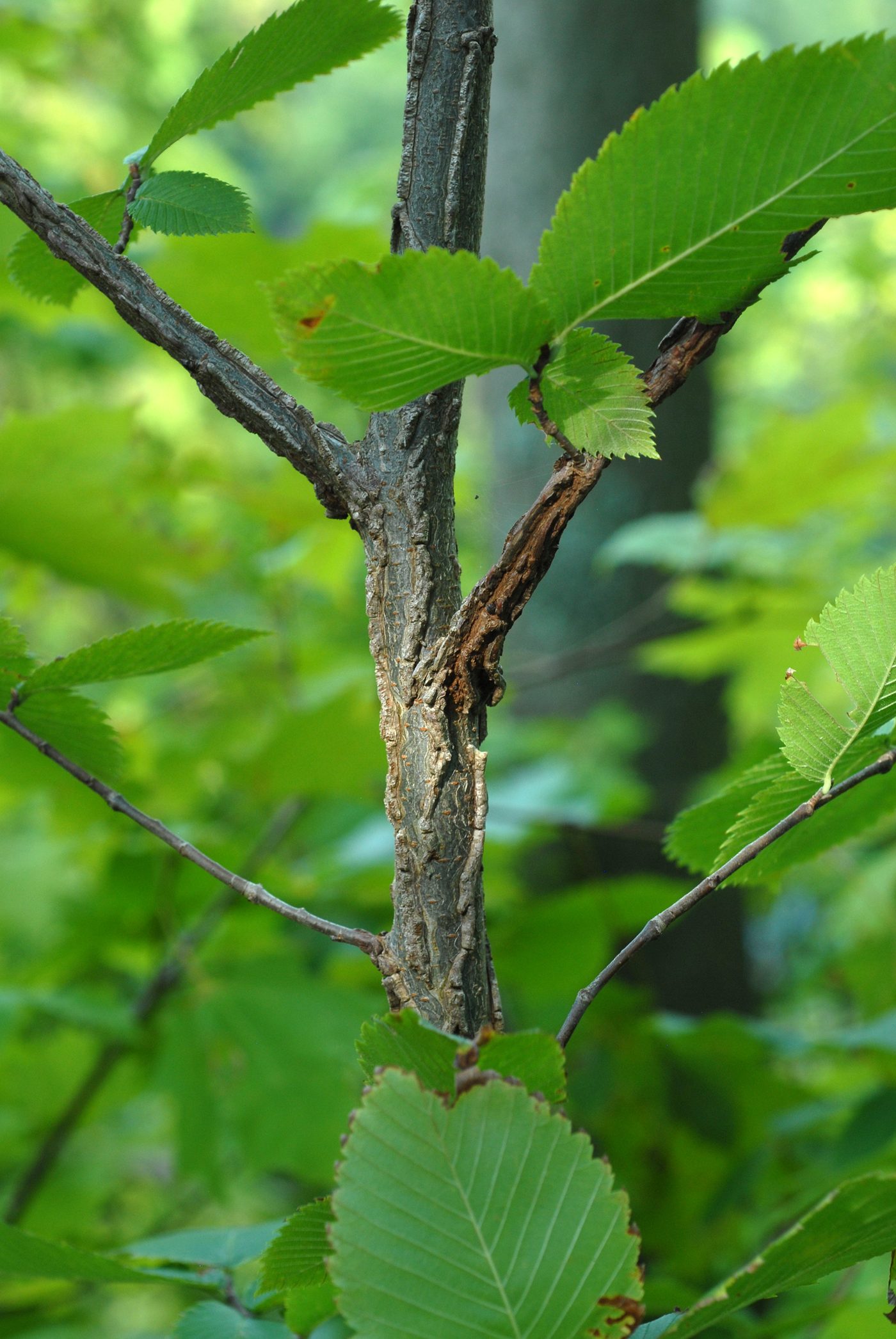
The sapwood is nearly white. The heartwood is light brown, often tinged with red. Rock elm belongs to the hard elm class, which runs somewhat heavier than the soft elms.
Workability
The Handbook credits the elms with excellent bending qualities, and the hard elms — rock elm among them — are preferred where greater strength is required. That toughness is why elm historically served in vehicle parts and farm implements.
Common uses
- Furniture
- Decorative panels
- Boxes
- Baskets
- Crates
- Slack cooperage
- Agricultural implements
- Caskets
- Vehicle components
Conservation: IUCN Red List: Least Concern (checked 2026-10-24).
Work with Rock Elm
Similar woods
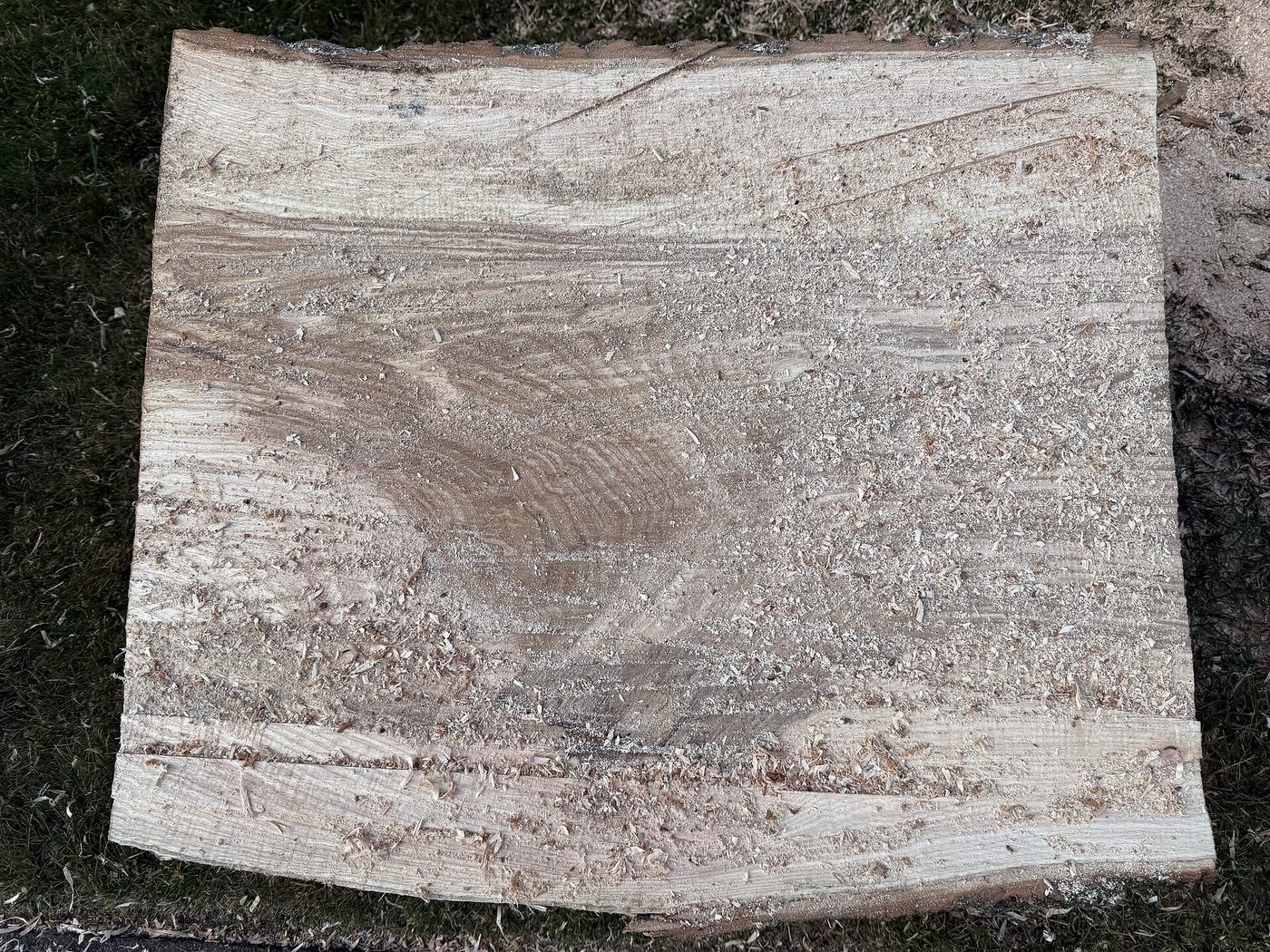
Photo: Douglas Goldman · CC BY-SA 4.0 (source)
Property data: USDA Forest Products Laboratory, Wood Handbook — Wood as an Engineering Material, FPL-GTR-282 (2021).