Slippery Elm
Ulmus rubra · Hardwood · North America
Properties
| Janka hardness | 860 lbf (3,825 N) |
|---|---|
| Average dried weight (est.) | 33 lb/ft³ (530 kg/m³) |
| Specific gravity | 0.53 |
| Modulus of rupture | 13,000 psi (89.6 MPa) |
| Modulus of elasticity | 1.49 million psi (10.27 GPa) |
| Crushing strength | 6,360 psi (43.9 MPa) |
| Shrinkage — radial | 4.9% |
| Shrinkage — tangential | 8.9% |
| Shrinkage — volumetric | 13.8% |
| Shrinkage T/R ratio | 1.8 |
Values at 12% moisture content, clear-wood averages. Source: USDA Forest Products Laboratory, Wood Handbook FPL-GTR-282 (2021), Table 5–3b p. 5–9; shrinkage Table 4–3 p. 4–8.
Slippery elm belongs to the soft elm class, and like the other elms its lumber and veneer are used today mostly for furniture and decorative panels. Historically, elm went into boxes, baskets, crates, slack cooperage, and caskets, work that drew on the wood's excellent bending qualities.
Appearance & grain
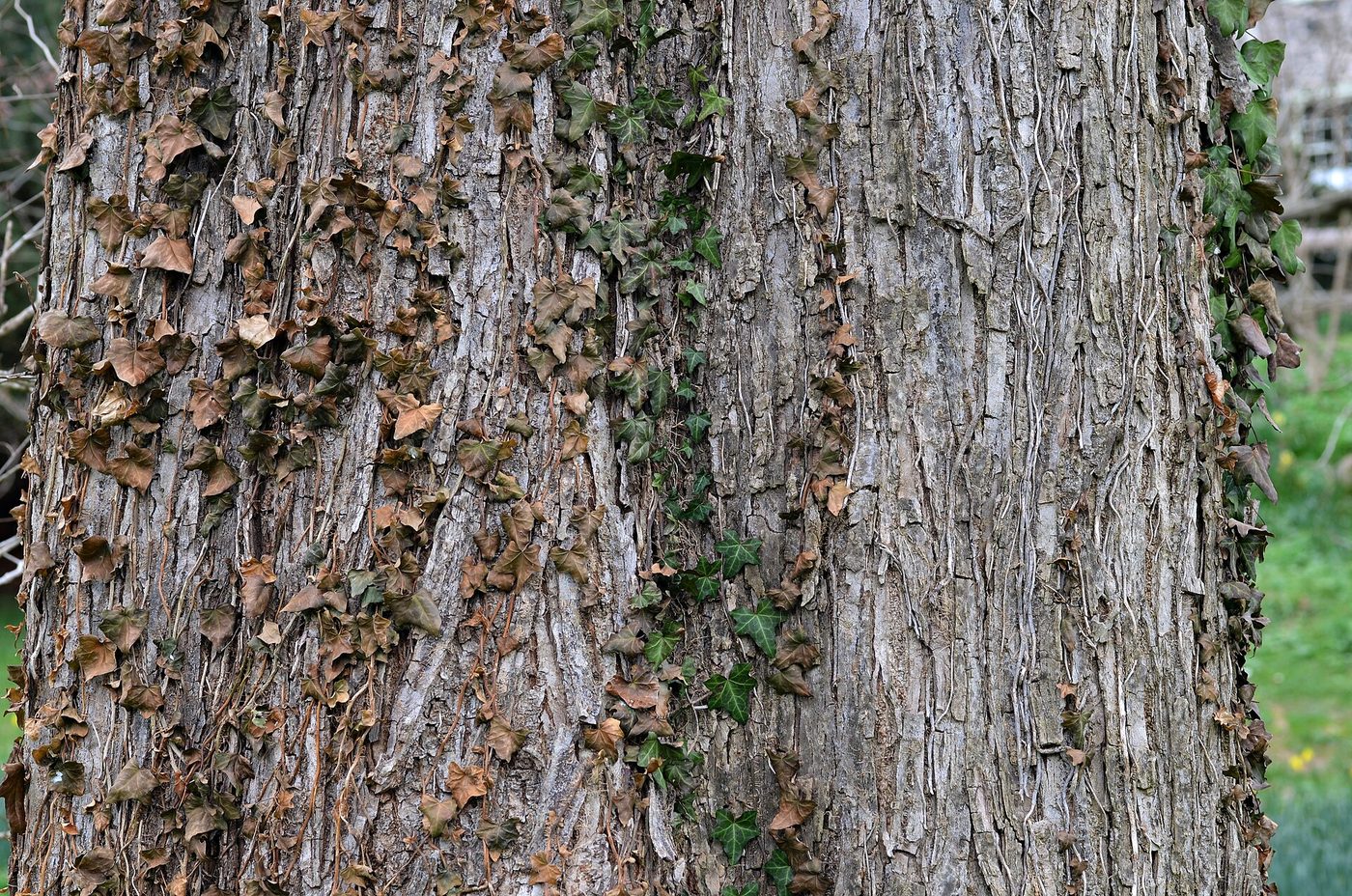
The sapwood is nearly white, and the heartwood is light brown, often tinged with red.
Workability
The soft elms are moderately heavy, moderately hard and stiff, and have high shock resistance. Elm as a group has excellent bending qualities.
Common uses
- Furniture
- Decorative panels
- Veneer
- Boxes
- Baskets
- Crates
- Slack cooperage
- Agricultural supplies and implements
- Caskets and burial boxes
- Vehicle components
Conservation: IUCN Red List: Least Concern (checked 2026-10-24).
Work with Slippery Elm
Similar woods
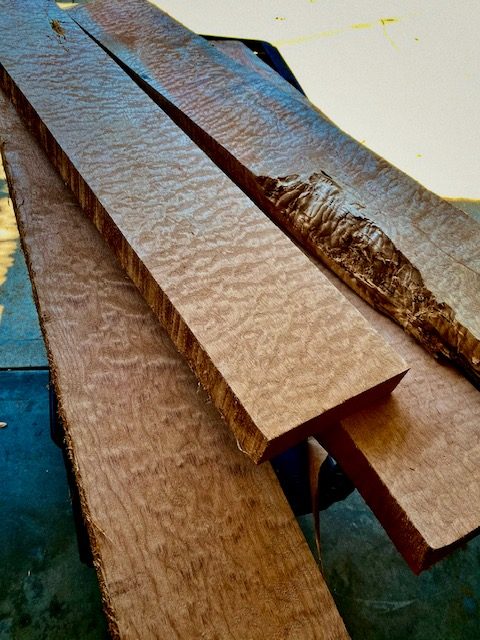
Photo: Photo by and (c)2016 Derek Ramsey (Ram-Man) · CC BY-SA 4.0 (source)
Property data: USDA Forest Products Laboratory, Wood Handbook — Wood as an Engineering Material, FPL-GTR-282 (2021).