Baldcypress
Taxodium distichum (L.) Rich. · Softwood · North America
Properties
| Janka hardness | 510 lbf (2,268 N) |
|---|---|
| Average dried weight (est.) | 29 lb/ft³ (460 kg/m³) |
| Specific gravity | 0.46 |
| Modulus of rupture | 10,600 psi (73.1 MPa) |
| Modulus of elasticity | 1.44 million psi (9.93 GPa) |
| Crushing strength | 6,360 psi (43.9 MPa) |
Values at 12% moisture content, clear-wood averages. Source: USDA Forest Products Laboratory, Wood Handbook FPL-GTR-282 (2021), Table 5–3b p. 5–11.
Baldcypress is a southern conifer whose old-growth heartwood is one of the most decay resistant of U.S. species. Old growth is now scarce, and most lumber today comes from second-growth trees, which are only moderately decay resistant.
Appearance & grain
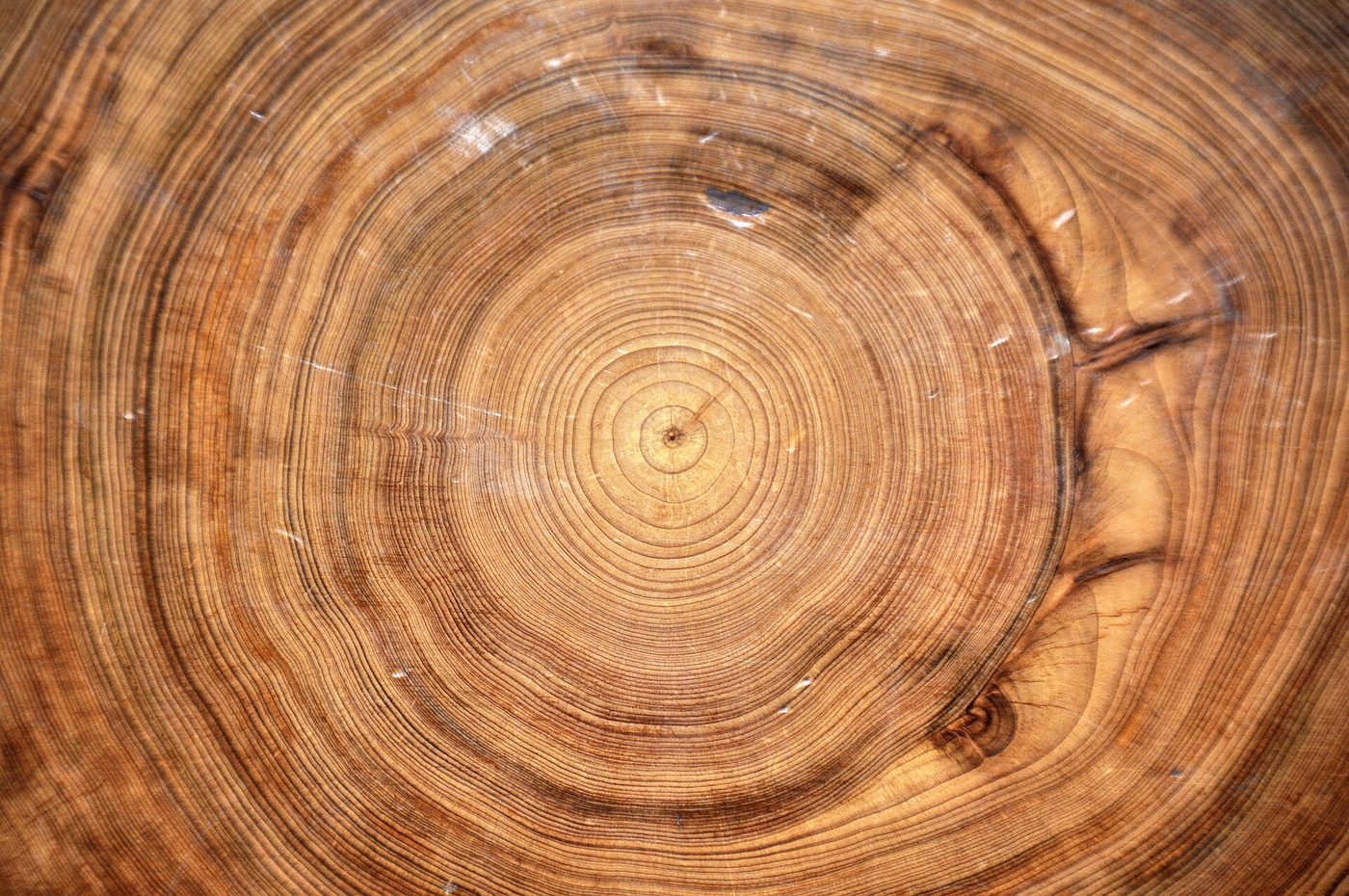
The sapwood is narrow and nearly white, while the heartwood varies widely in color: light yellowish brown, dark brownish red, brown, or chocolate. Pecky cypress, pocketed by a fungus, is a distinctive form used for novelty paneling.
Durability
Old-growth heartwood is one of the most decay resistant of U.S. species; second-growth heartwood is moderately decay resistant.
Workability
The wood is moderately heavy, moderately strong, and moderately hard. Its shrinkage is moderately low, and the decay in pecky cypress stops once the wood is cut and dried.
Common uses
- Building construction
- Siding
- Millwork
- Interior woodwork
- Paneling
- Caskets
- Sashes, doors, and blinds
- Tanks and vats
- Ship and boat building
- Cooling towers
Conservation: IUCN Red List: Least Concern (checked 2026-10-24).