Eastern Hemlock
Tsuga canadensis (L.) Carr. · Softwood · North America
Properties
| Janka hardness | 500 lbf (2,224 N) |
|---|---|
| Average dried weight (est.) | 25 lb/ft³ (400 kg/m³) |
| Specific gravity | 0.40 |
| Modulus of rupture | 8,900 psi (61.4 MPa) |
| Modulus of elasticity | 1.20 million psi (8.27 GPa) |
| Crushing strength | 5,410 psi (37.3 MPa) |
| Shrinkage — radial | 3.0% |
| Shrinkage — tangential | 6.8% |
| Shrinkage — volumetric | 9.7% |
| Shrinkage T/R ratio | 2.3 |
Values at 12% moisture content, clear-wood averages. Source: USDA Forest Products Laboratory, Wood Handbook FPL-GTR-282 (2021), Table 5–3b p. 5–12; shrinkage Table 4–3 p. 4–8.
Eastern hemlock is a moderately lightweight softwood (specific gravity 0.40, Janka hardness 500 lbf) of only moderate strength, produced across the Northeast and Great Lakes states. Most of it goes into framing lumber, sheathing, and boxes rather than finish work.
Appearance & grain
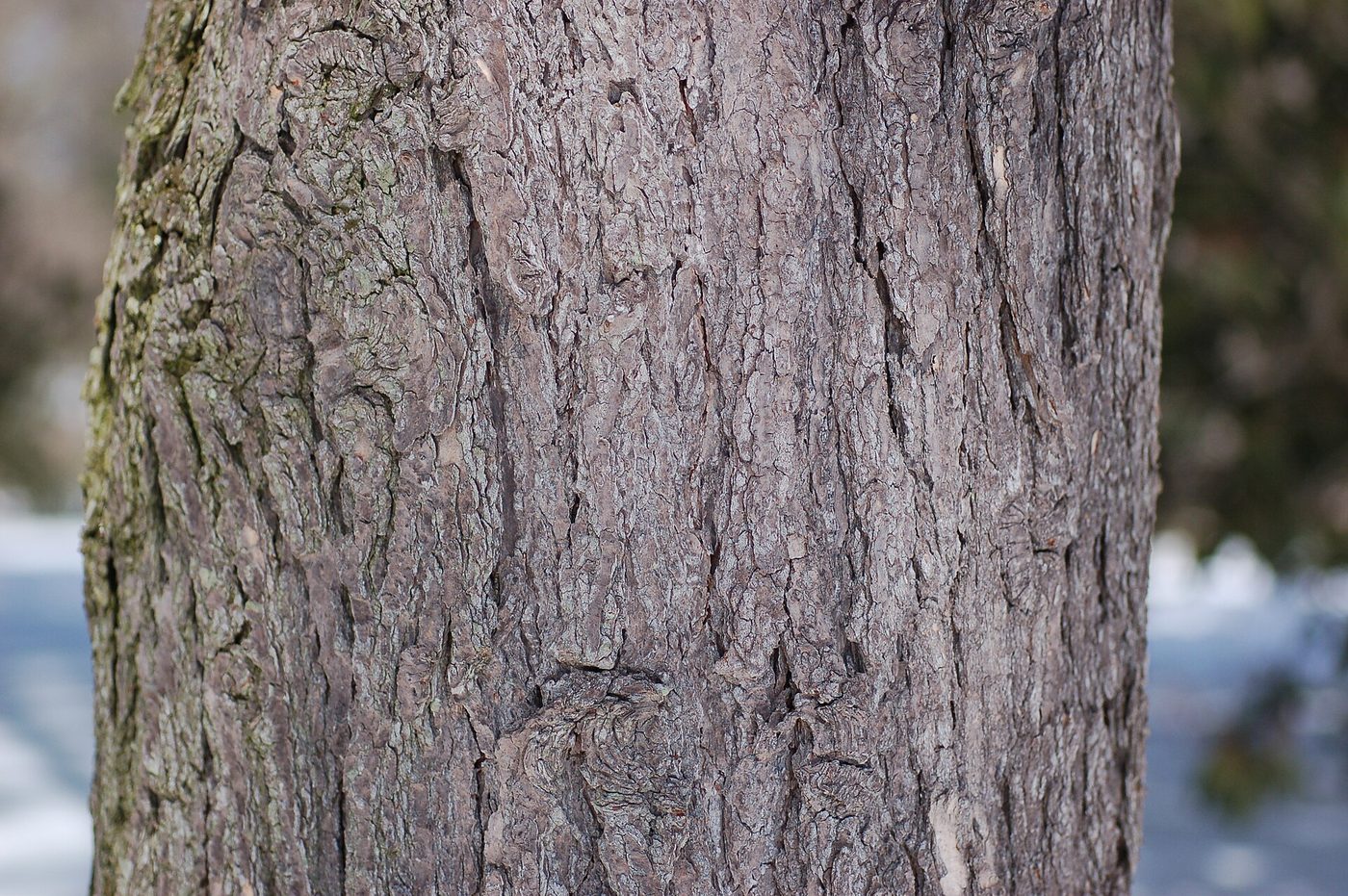
The heartwood is pale brown with a reddish hue. The sapwood is not distinctly separated from the heartwood and may be somewhat lighter in color. The texture is coarse and uneven.
Workability
The Handbook describes the wood as moderately lightweight and moderately hard, with strength on the low-to-moderate side. Old-growth logs can carry shake — internal separations along the rings — which downgrades some lumber before it is ever sawn.
Common uses
- Building construction framing
- Sheathing
- Subflooring
- Roof boards
- Boxes
- Pallets
- Crates
- Pulpwood
Conservation: IUCN Red List: Near Threatened (checked 2026-10-24).
Work with Eastern Hemlock
Similar woods
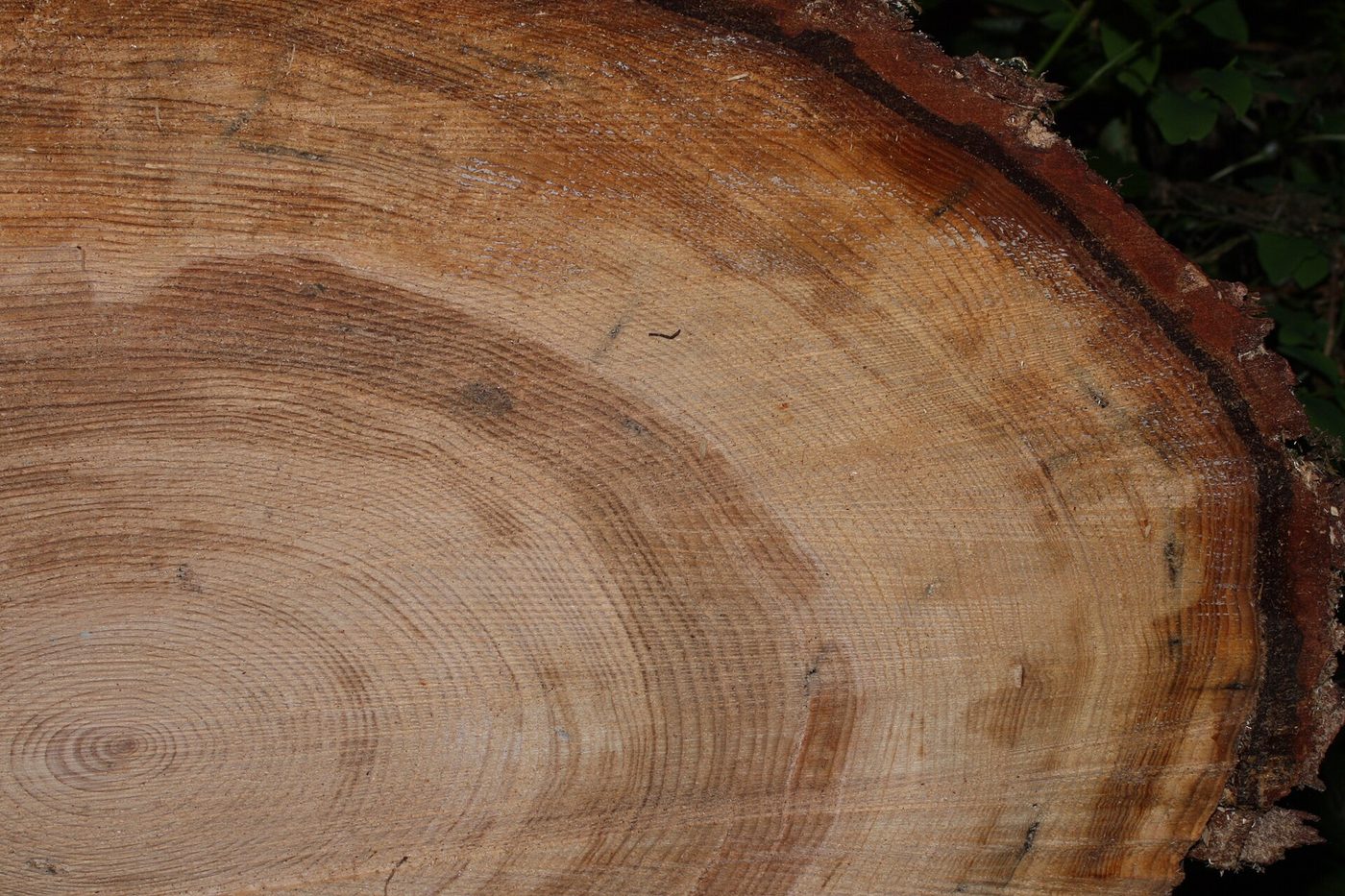
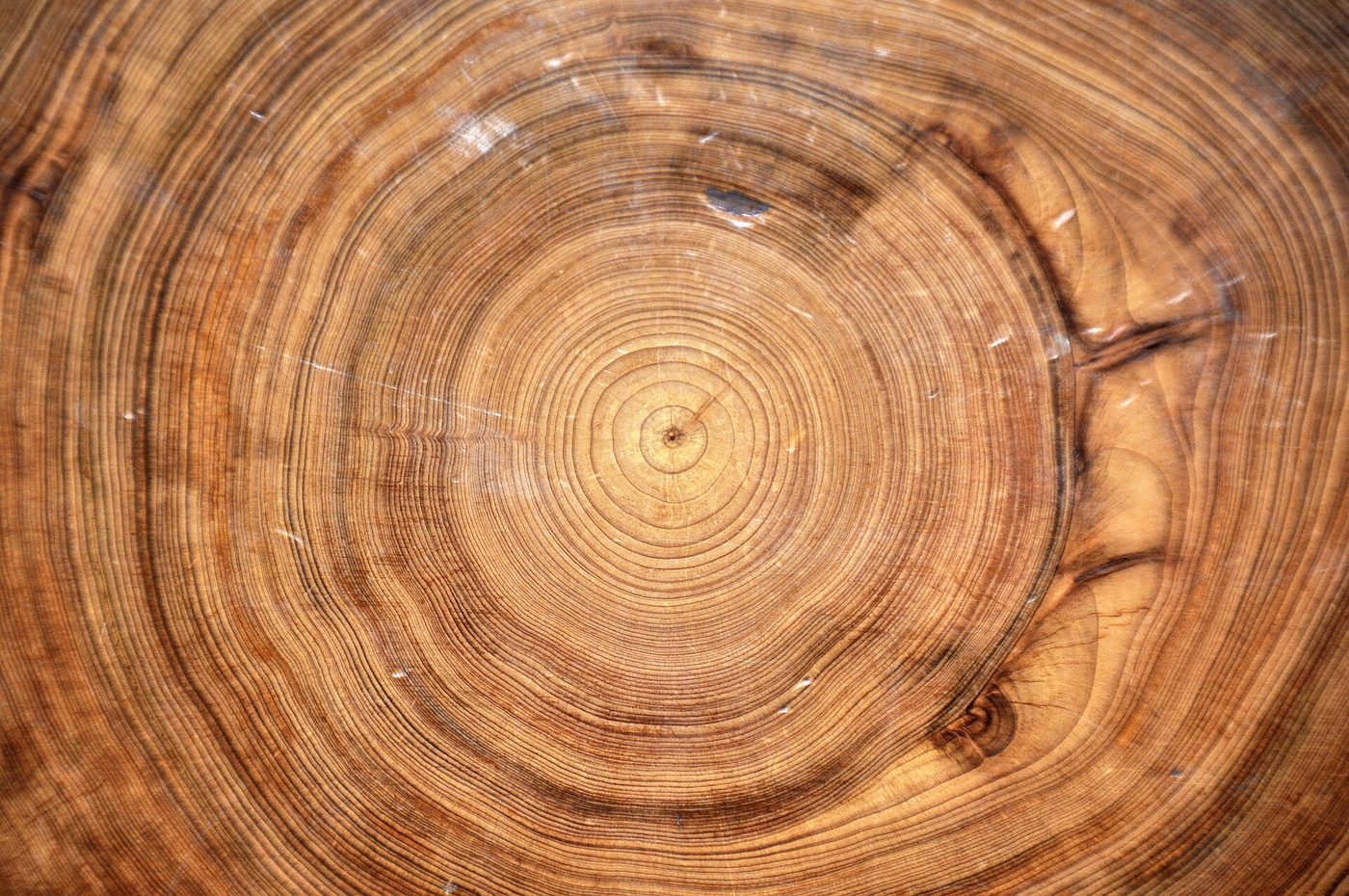
Photo: Photo (c)2007 Derek Ramsey (Ram-Man) · CC BY-SA 2.5 (source)
Property data: USDA Forest Products Laboratory, Wood Handbook — Wood as an Engineering Material, FPL-GTR-282 (2021).