Balsa
Ochroma pyramidale · Hardwood · Central and South America
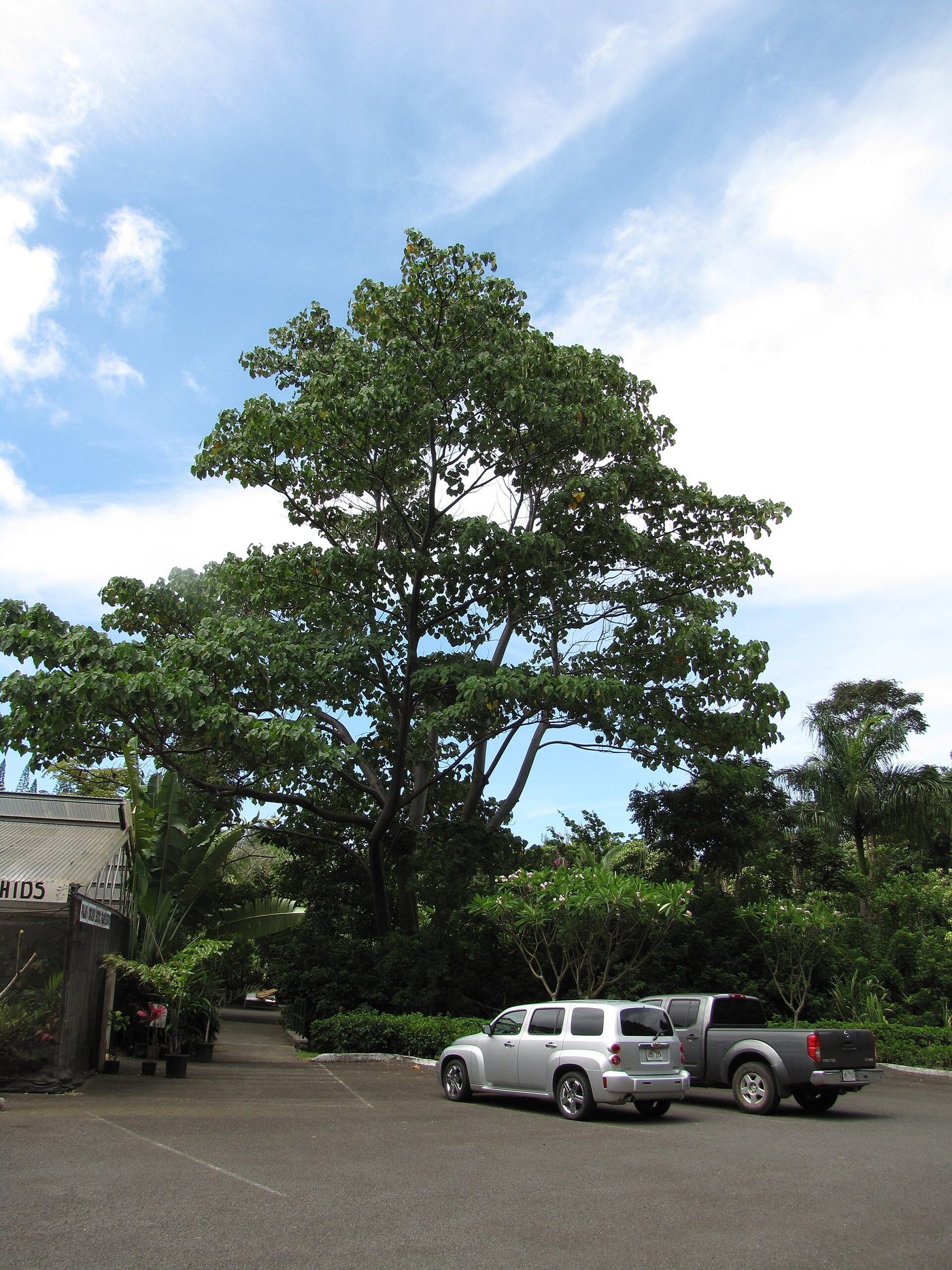
Properties
| Average dried weight (est.) | 10 lb/ft³ (160 kg/m³) |
|---|---|
| Specific gravity | 0.16 |
| Modulus of rupture | 3,140 psi (21.7 MPa) |
| Modulus of elasticity | 0.49 million psi (3.38 GPa) |
| Crushing strength | 2,160 psi (14.9 MPa) |
| Shrinkage — radial | 3.0% |
| Shrinkage — tangential | 7.6% |
| Shrinkage — volumetric | 10.8% |
| Shrinkage T/R ratio | 2.5 |
Values at 12% moisture content, clear-wood averages. Source: USDA Forest Products Laboratory, Wood Handbook FPL-GTR-282 (2021), Table 5-5b p. 5-22; shrinkage Table 4-4 p. 4-9.
Balsa, a tropical American wood with Ecuador as the principal source of supply, is the lightest and softest of all woods on the market. Its light weight and porous structure make it a first choice for lifesaving equipment, floats, insulation, and models.
Appearance & grain
Balsa is readily recognized by its nearly white to oatmeal color, often with a yellowish or pinkish hue. The wood has a unique velvety feel and an exceedingly porous composition.
Workability
As the lightest and softest commercial wood, balsa offers minimal resistance in working; lumber selected for the United States market averages only about 180 kg per cubic meter when dry, and often as little as 100 kg per cubic meter. That same porous composition makes it highly efficient where buoyancy, or insulation against heat, cold, sound, and vibration, is important.
Common uses
- Lifesaving equipment
- Floats
- Rafts
- Corestock
- Insulation
- Cushioning
- Sound modifiers
- Models
- Novelties
Conservation: IUCN Red List: Least Concern (checked 2026-10-24).
Work with Balsa
Similar woods
Photo: Forest and Kim Starr · CC BY 3.0 us (source)
Property data: USDA Forest Products Laboratory, Wood Handbook — Wood as an Engineering Material, FPL-GTR-282 (2021).