Black Locust
Robinia pseudoacacia · Hardwood · North America
Properties
| Janka hardness | 1,700 lbf (7,562 N) |
|---|---|
| Average dried weight (est.) | 43 lb/ft³ (690 kg/m³) |
| Specific gravity | 0.69 |
| Modulus of rupture | 19,400 psi (133.8 MPa) |
| Modulus of elasticity | 2.05 million psi (14.13 GPa) |
| Crushing strength | 10,180 psi (70.2 MPa) |
| Shrinkage — radial | 4.6% |
| Shrinkage — tangential | 7.2% |
| Shrinkage — volumetric | 10.2% |
| Shrinkage T/R ratio | 1.6 |
Values at 12% moisture content, clear-wood averages. Source: USDA Forest Products Laboratory, Wood Handbook FPL-GTR-282 (2021), Table 5–3b p. 5–10; shrinkage Table 4–3 p. 4–8.
Black locust is a heavy, hard, exceptionally durable North American hardwood best known for fence posts and other outdoor service. Its strong, stiff, shock-resistant wood also serves for poles, railroad crossties, mine timbers, and stakes.
Appearance & grain
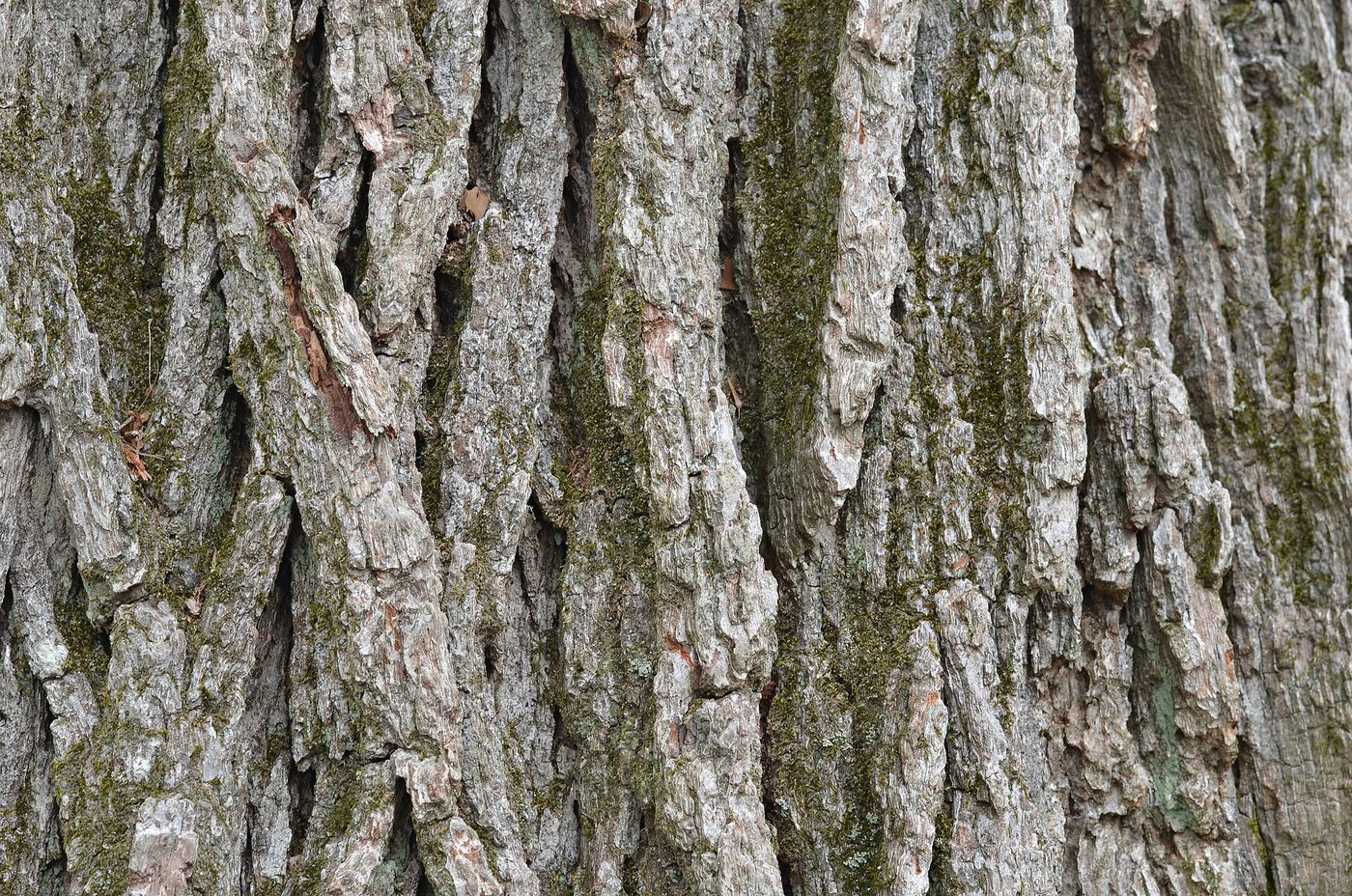
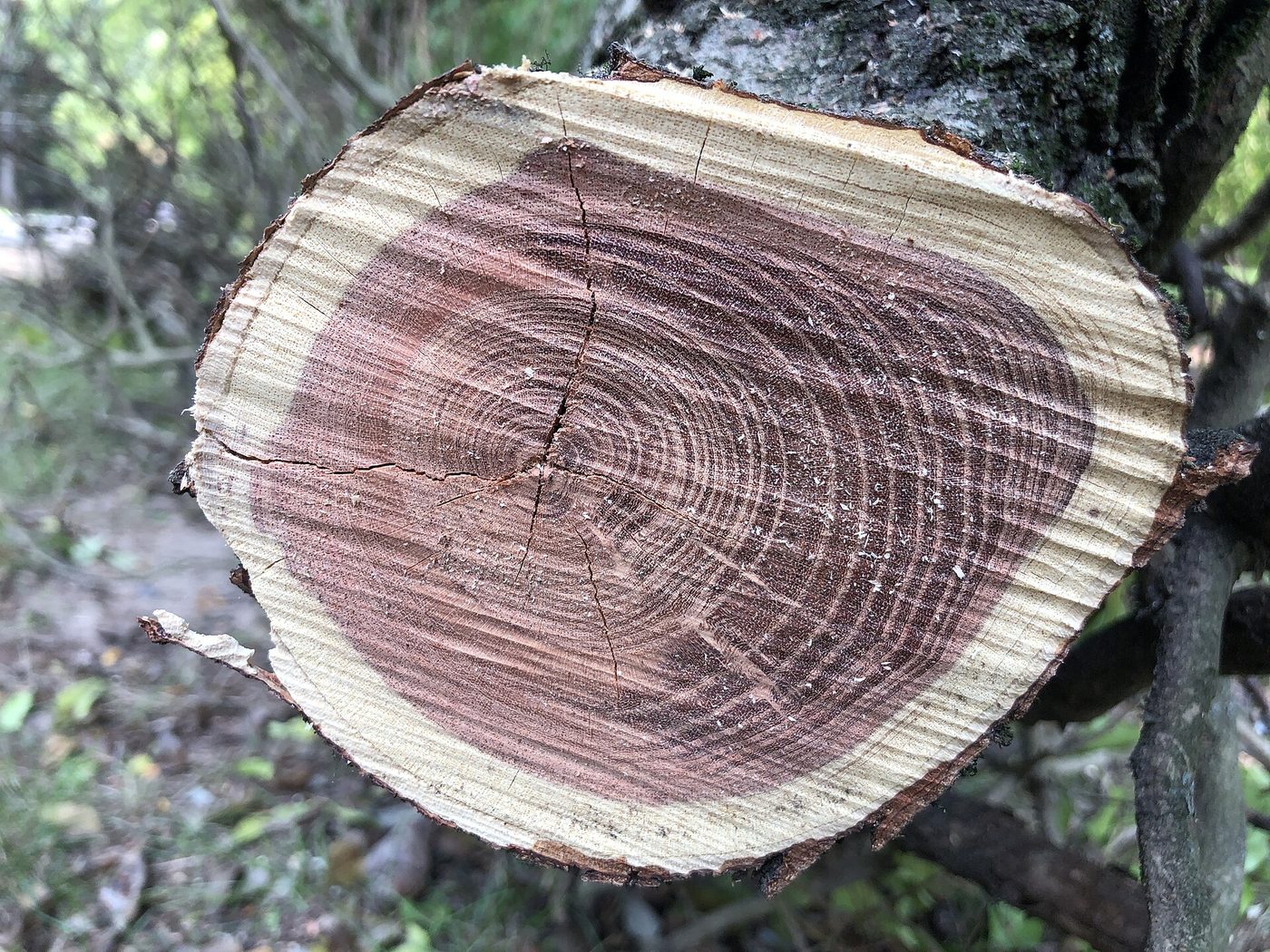
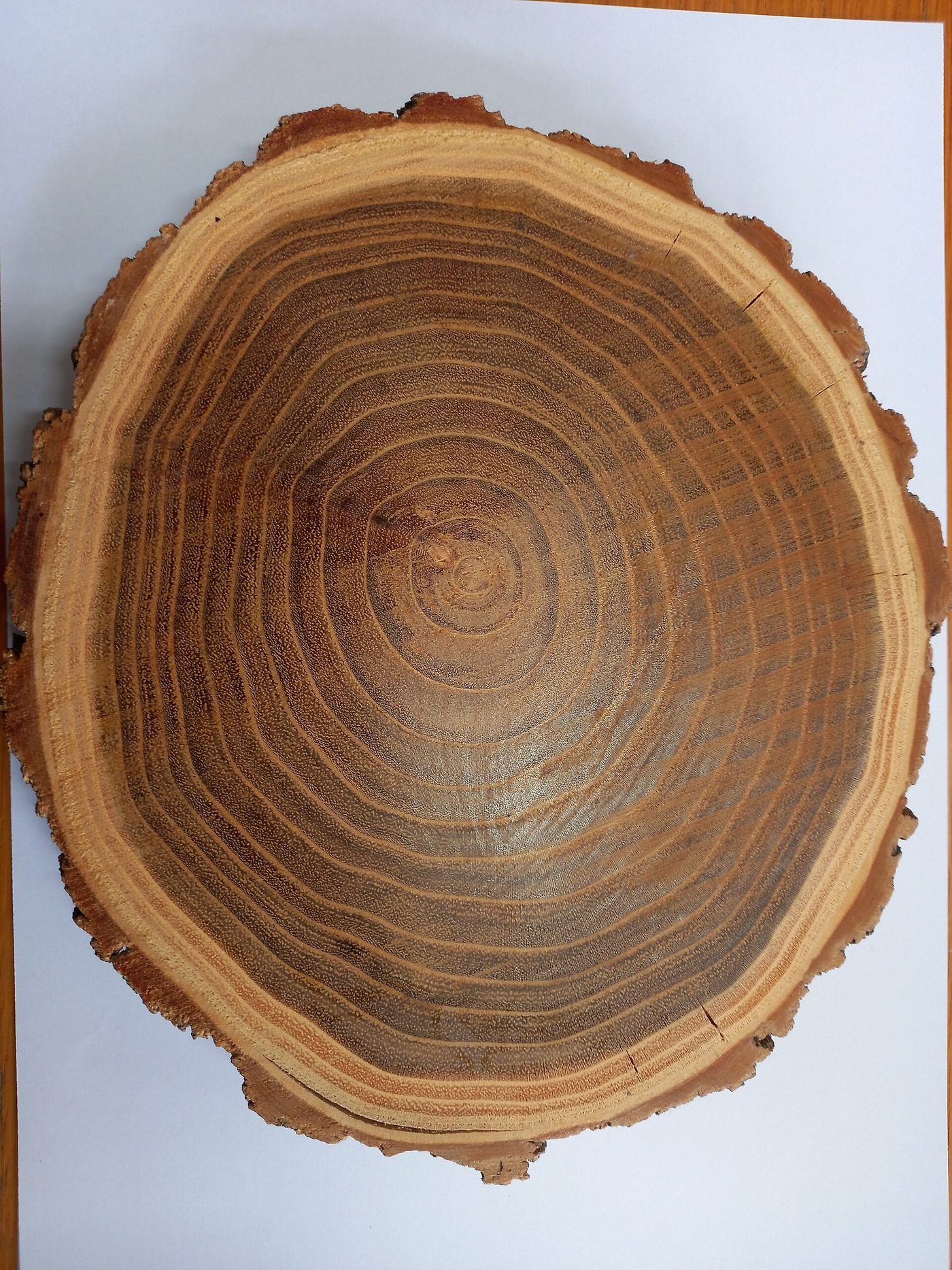
The sapwood is narrow and creamy white. The heartwood, when freshly cut, varies from greenish yellow to dark brown.
Durability
Rated highly resistant to decay — the heartwood has high decay resistance.
Workability
Black locust is heavy, hard, strong, and stiff, and it is resistant to shock. Its shrinkage in drying is moderately low for so dense a wood.
Common uses
- Fence posts
- Poles
- Railroad crossties
- Mine timbers
- Stakes
- Fuel
- Rough construction
- Crating
- Insulator pins
- Wooden pegs (treenails)
Conservation: IUCN Red List: Least Concern (checked 2026-10-24).