Butternut
Juglans cinerea · Hardwood · North America
Properties
| Janka hardness | 490 lbf (2,180 N) |
|---|---|
| Average dried weight (est.) | 24 lb/ft³ (380 kg/m³) |
| Specific gravity | 0.38 |
| Modulus of rupture | 8,100 psi (55.8 MPa) |
| Modulus of elasticity | 1.18 million psi (8.14 GPa) |
| Crushing strength | 5,110 psi (35.2 MPa) |
| Shrinkage — radial | 3.4% |
| Shrinkage — tangential | 6.4% |
| Shrinkage — volumetric | 10.6% |
| Shrinkage T/R ratio | 1.9 |
Values at 12% moisture content, clear-wood averages. Source: USDA Forest Products Laboratory, Wood Handbook FPL-GTR-282 (2021), Table 5–3b p. 5–9; shrinkage Table 4–3 p. 4–8.
Butternut, a walnut relative sometimes called white walnut, is a light, soft hardwood whose lumber and veneer are used for furniture, cabinets, paneling, and interior woodwork. It resembles black walnut, especially when stained, but without black walnut's strength and hardness.
Appearance & grain
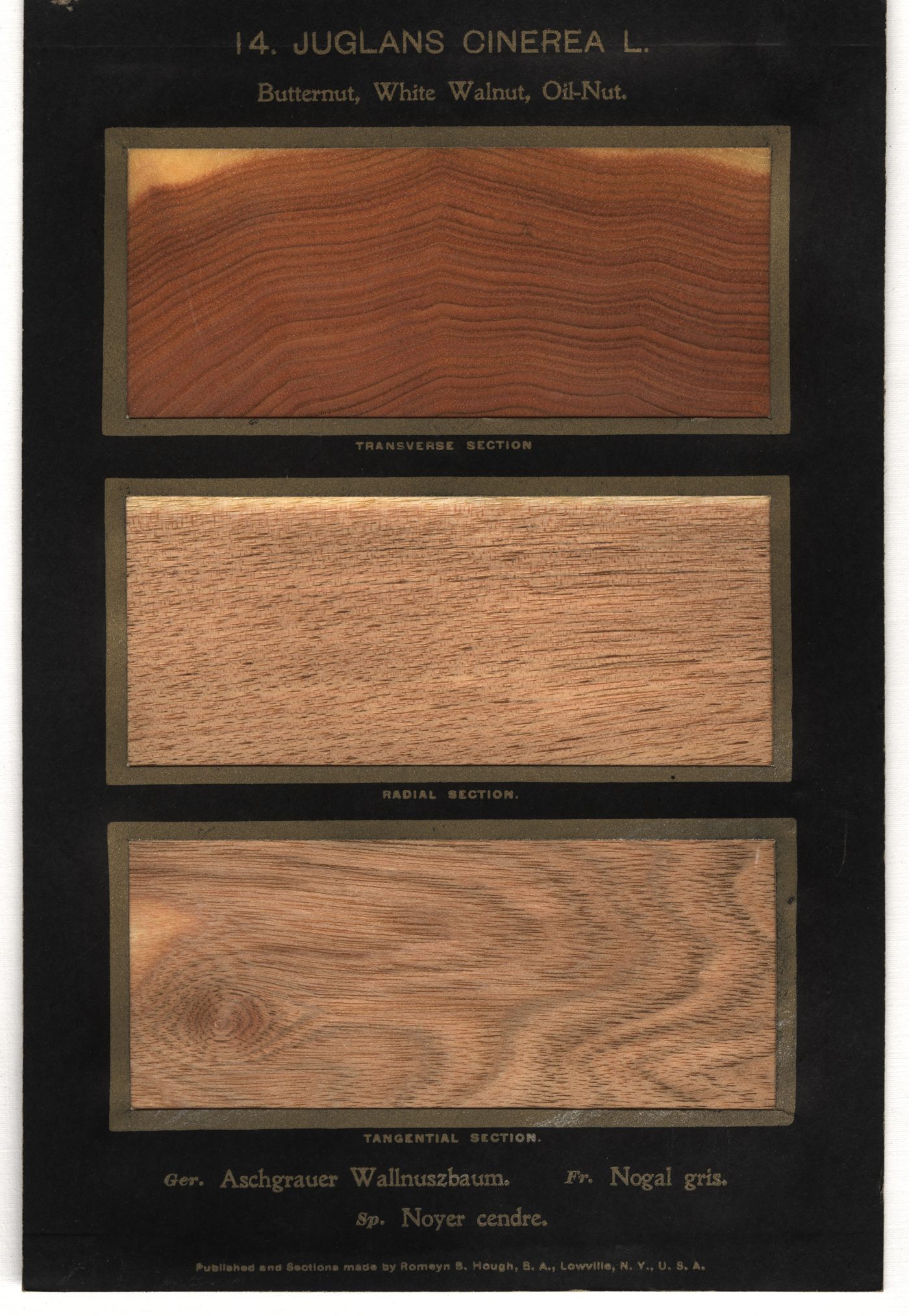
The sapwood is narrow and nearly white. The heartwood is light brown, often with pinkish tones or darker brown streaks, and the texture is rather coarse.
Workability
Butternut machines easily and finishes well. It is moderately light in weight and moderately soft, moderately weak in bending and endwise compression, relatively low in stiffness, and moderately high in shock resistance.
Common uses
- Furniture
- Cabinets
- Paneling
- Interior woodwork
- Veneer
Conservation: IUCN Red List: Endangered (checked 2026-10-24).
Work with Butternut
Similar woods
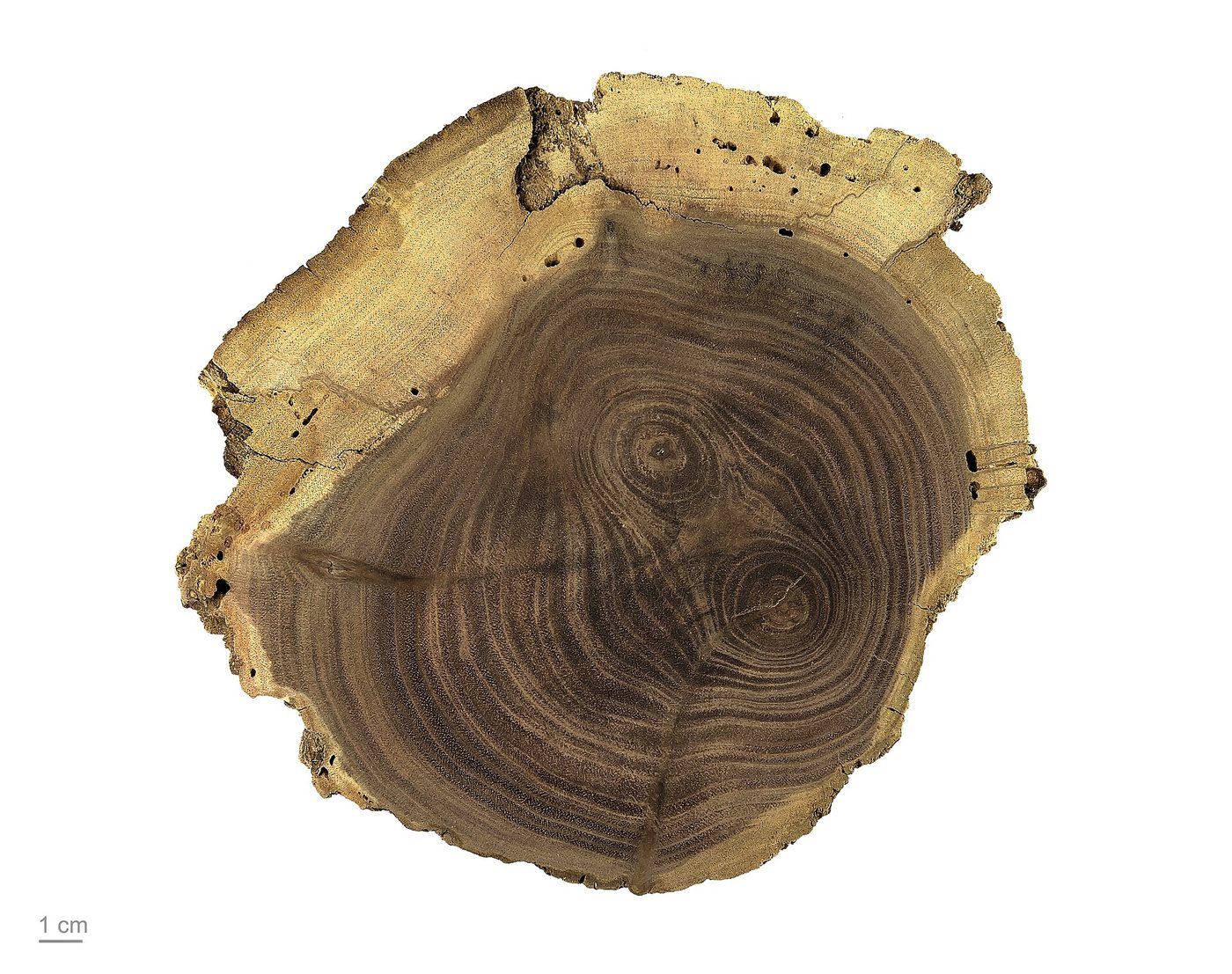
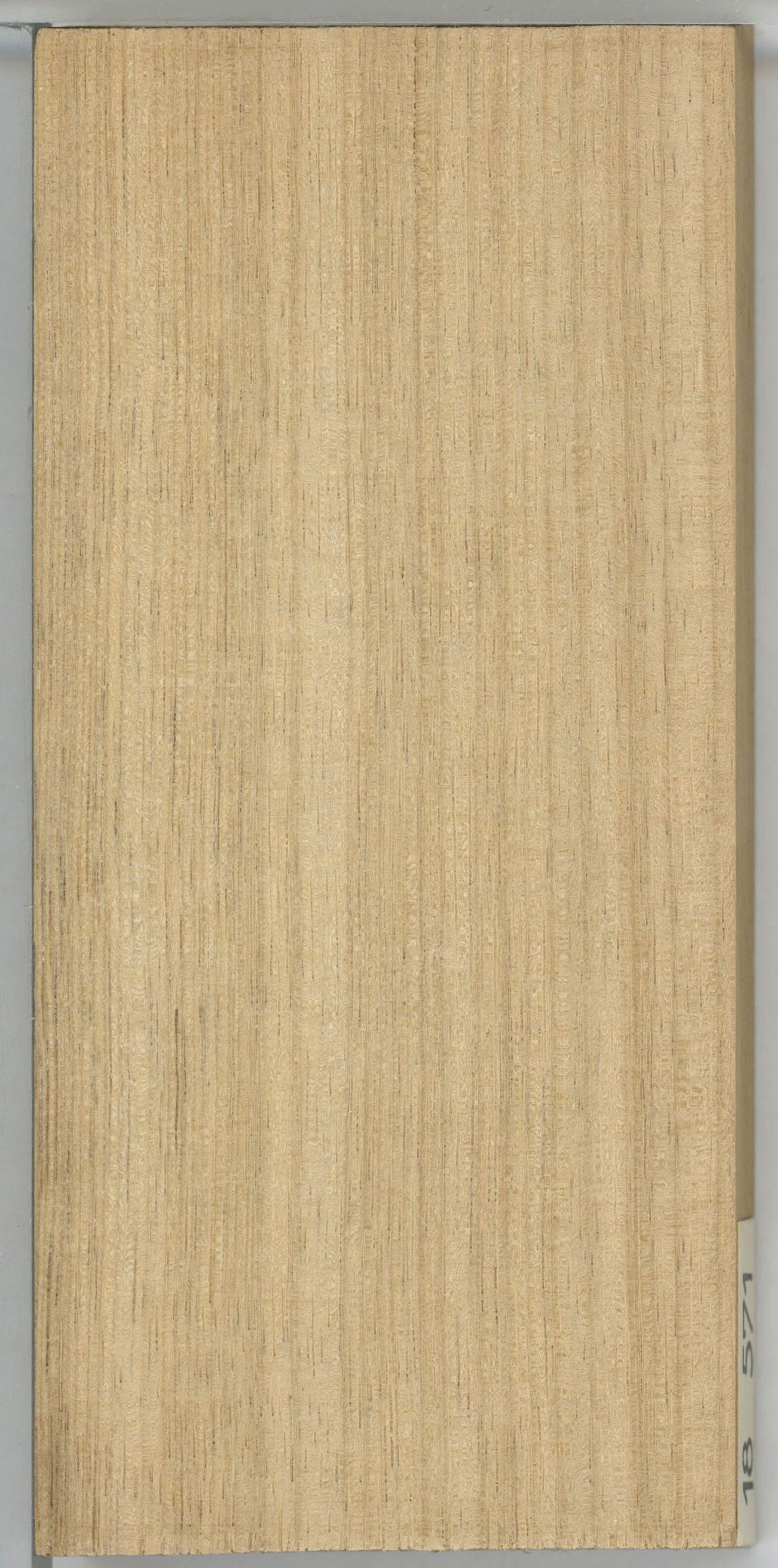
Photo: Romeyn Beck Hough · Public domain (source)
Property data: USDA Forest Products Laboratory, Wood Handbook — Wood as an Engineering Material, FPL-GTR-282 (2021).