Engelmann spruce
Picea engelmannii Parry ex Engelm. · Softwood · North America

Properties
| Janka hardness | 390 lbf (1,735 N) |
|---|---|
| Average dried weight (est.) | 22 lb/ft³ (350 kg/m³) |
| Specific gravity | 0.35 |
| Modulus of rupture | 9,300 psi (64.1 MPa) |
| Modulus of elasticity | 1.30 million psi (8.96 GPa) |
| Crushing strength | 4,480 psi (30.9 MPa) |
| Shrinkage — radial | 3.8% |
| Shrinkage — tangential | 7.1% |
| Shrinkage — volumetric | 11.0% |
| Shrinkage T/R ratio | 1.9 |
Values at 12% moisture content, clear-wood averages. Source: USDA Forest Products Laboratory, Wood Handbook FPL-GTR-282 (2021), Table 5-3 p. 5-13; shrinkage Table 4-3 p. 4-8.
Engelmann spruce is a high-elevation Rocky Mountain softwood used principally for lumber, mine timbers, railroad crossties, and poles. It also enters building construction as dimension lumber, flooring, and sheathing, and it has excellent properties for pulp and papermaking.
Appearance & grain
The heartwood is nearly white, with a slight tinge of red. The sapwood varies from 2 to 5 cm (1 to 2 in.) in width and is often difficult to distinguish from the heartwood, and the wood has medium to fine texture and no characteristic odor.
Workability
The wood is rated as lightweight, and it is soft and low in strength as a beam or post, as well as low in stiffness, shock resistance, and shrinkage. The lumber typically contains many small knots.
Common uses
- Lumber
- Mine timbers
- Railroad crossties
- Poles
- Dimension lumber
- Flooring
- Sheathing
- Pulp and papermaking
Conservation: IUCN Red List: Least Concern (checked 2026-10-24).
Work with Engelmann spruce
Similar woods
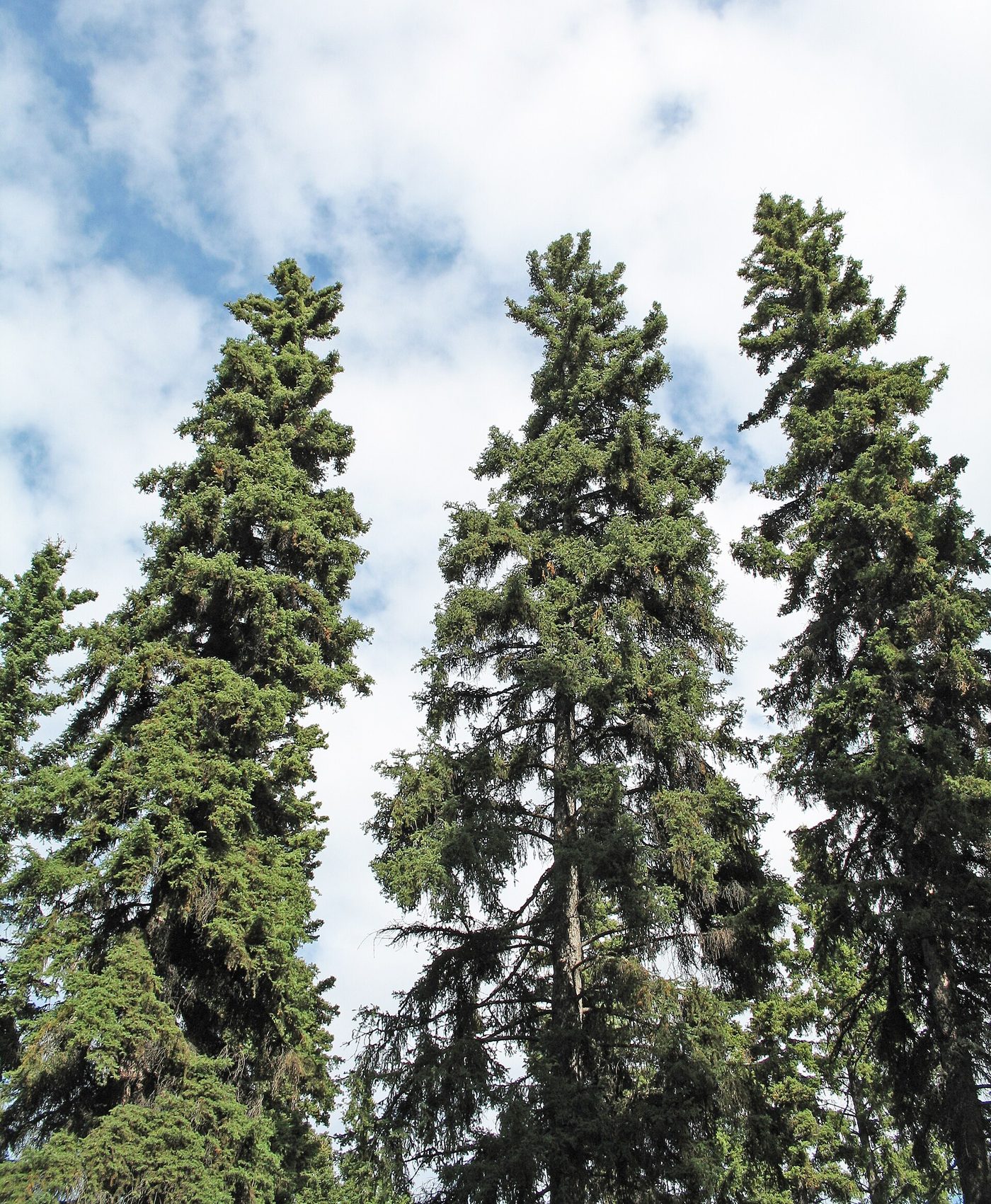
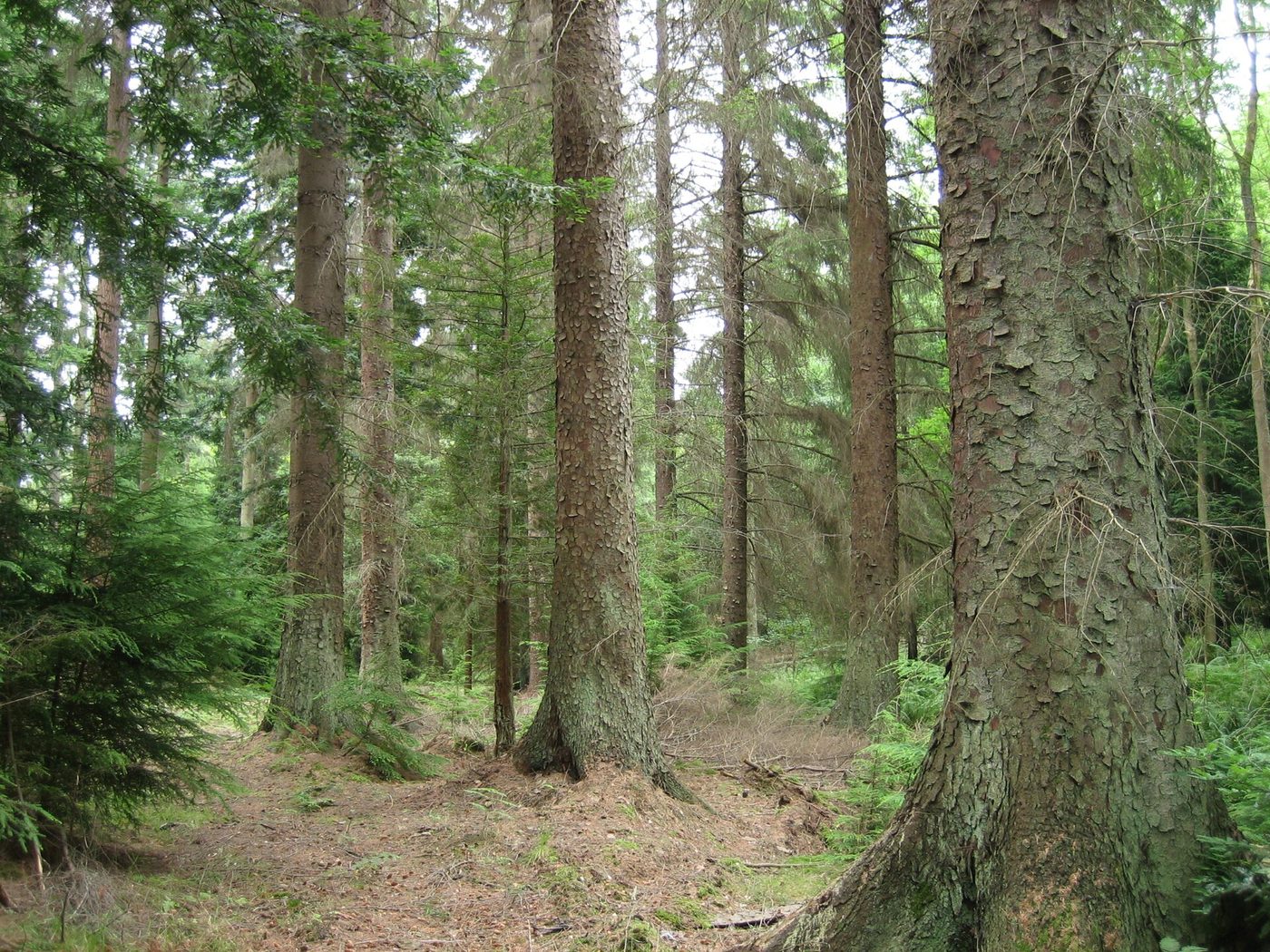
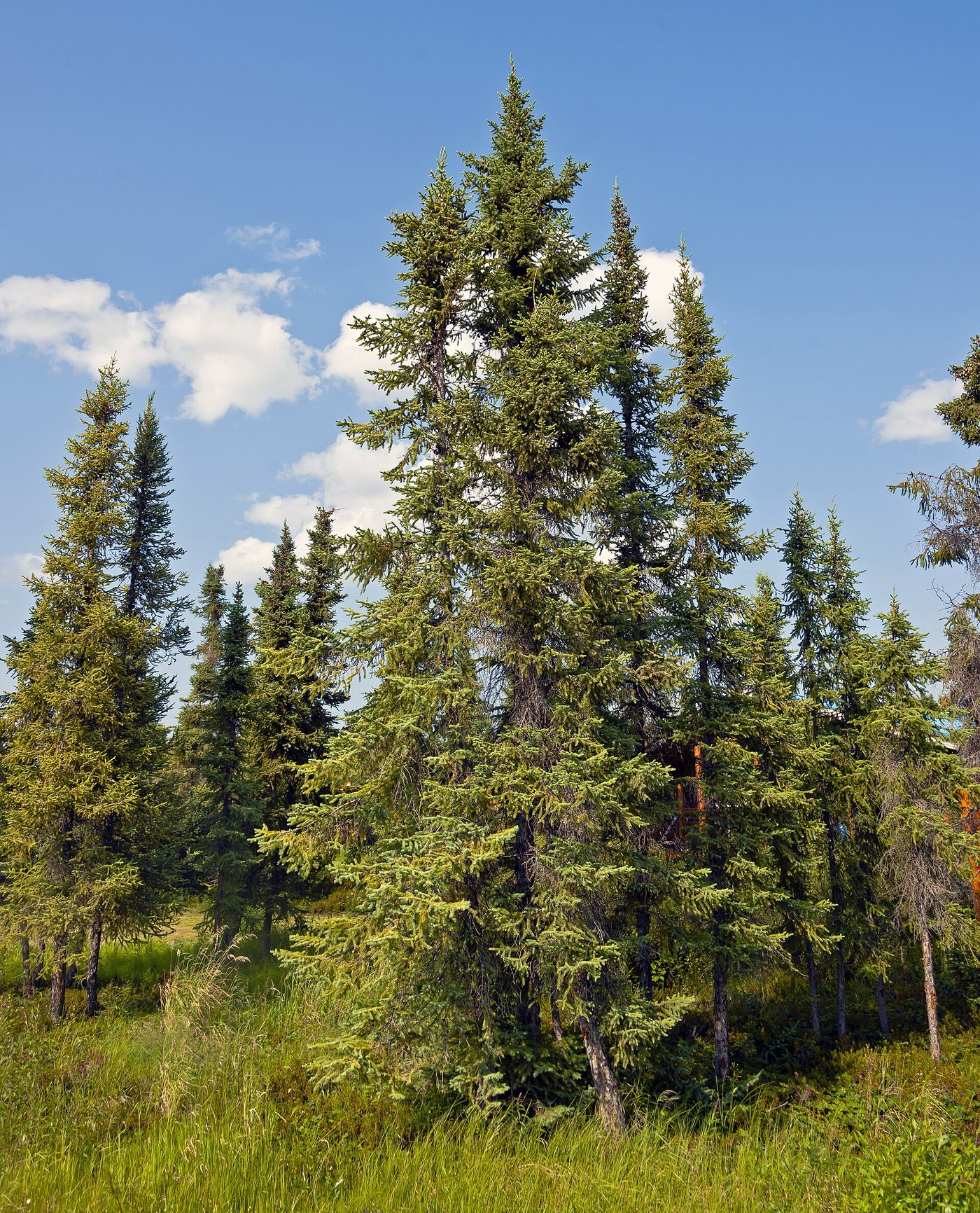
Photo: Krzysztof Ziarnek, Kenraiz · CC BY-SA 4.0 (source)
Property data: USDA Forest Products Laboratory, Wood Handbook — Wood as an Engineering Material, FPL-GTR-282 (2021).