Iroko
Chlorophora spp. · Hardwood · West Africa
Properties
| Janka hardness | 1,260 lbf (5,604 N) |
|---|---|
| Average dried weight (est.) | 34 lb/ft³ (540 kg/m³) |
| Specific gravity | 0.54 |
| Modulus of rupture | 12,400 psi (85.5 MPa) |
| Modulus of elasticity | 1.46 million psi (10.07 GPa) |
| Crushing strength | 7,590 psi (52.3 MPa) |
| Shrinkage — radial | 2.8% |
| Shrinkage — tangential | 3.8% |
| Shrinkage — volumetric | 8.8% |
| Shrinkage T/R ratio | 1.4 |
Values at 12% moisture content, clear-wood averages. Source: USDA Forest Products Laboratory, Wood Handbook FPL-GTR-282 (2021), Table 5-5b p. 5-23; shrinkage Table 4-4 p. 4-9.
Iroko is the timber of two African species (Milicia excelsa and M. regia), suggested as a substitute for teak because of its color and durability. That durability suits it to boat building, piles and other marine work, and railroad crossties, alongside joinery, flooring, furniture, veneer, and cabinetwork.
Appearance & grain
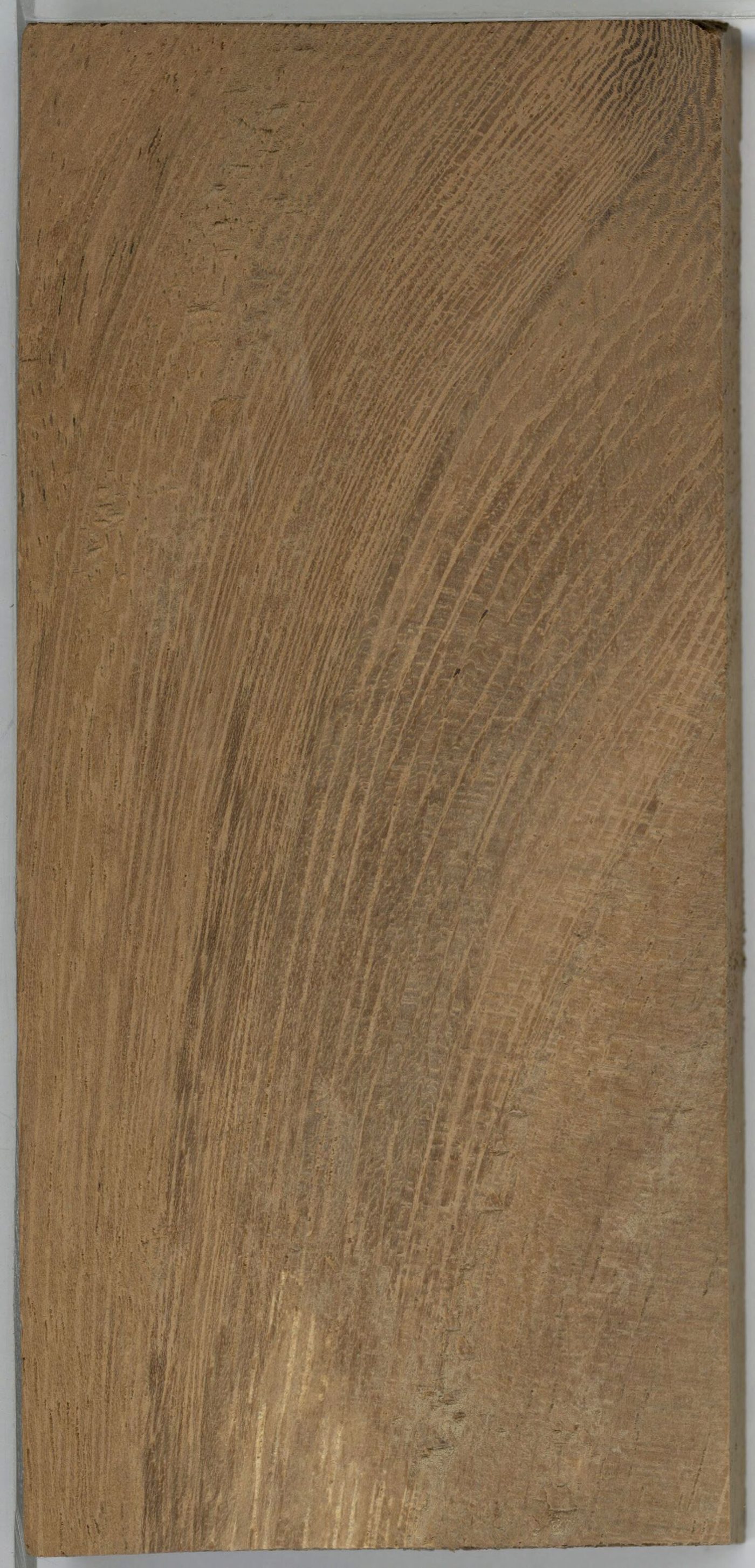
The heartwood varies from a pale yellowish brown to dark chocolate brown, with light markings occurring most conspicuously on flatsawn surfaces. The sapwood is yellowish white, the texture is medium to coarse, and the grain is typically interlocked.
Durability
Rated very resistant to decay — the heartwood is very resistant to decay fungi and resistant to termite and marine borer attack.
Workability
Iroko can be worked easily with hand or machine tools, but with some tearing of the interlocked grain, and occasional deposits of calcium carbonate can severely damage cutting edges. The wood dries rapidly with little or no degrade, and its strength is similar to that of red maple.
Common uses
- Boat building
- Piles
- Marine work
- Railroad crossties
- Joinery
- Flooring
- Furniture
- Veneer
- Cabinetwork
Conservation: IUCN Red List: Near Threatened (checked 2026-10-24).
Work with Iroko
Similar woods
Photo: Centre de coopération internationale en recherche agronomique pour le développement (France). Programme Bois. Producteur d'un fonds d'archives · Public domain (source)
Property data: USDA Forest Products Laboratory, Wood Handbook — Wood as an Engineering Material, FPL-GTR-282 (2021).