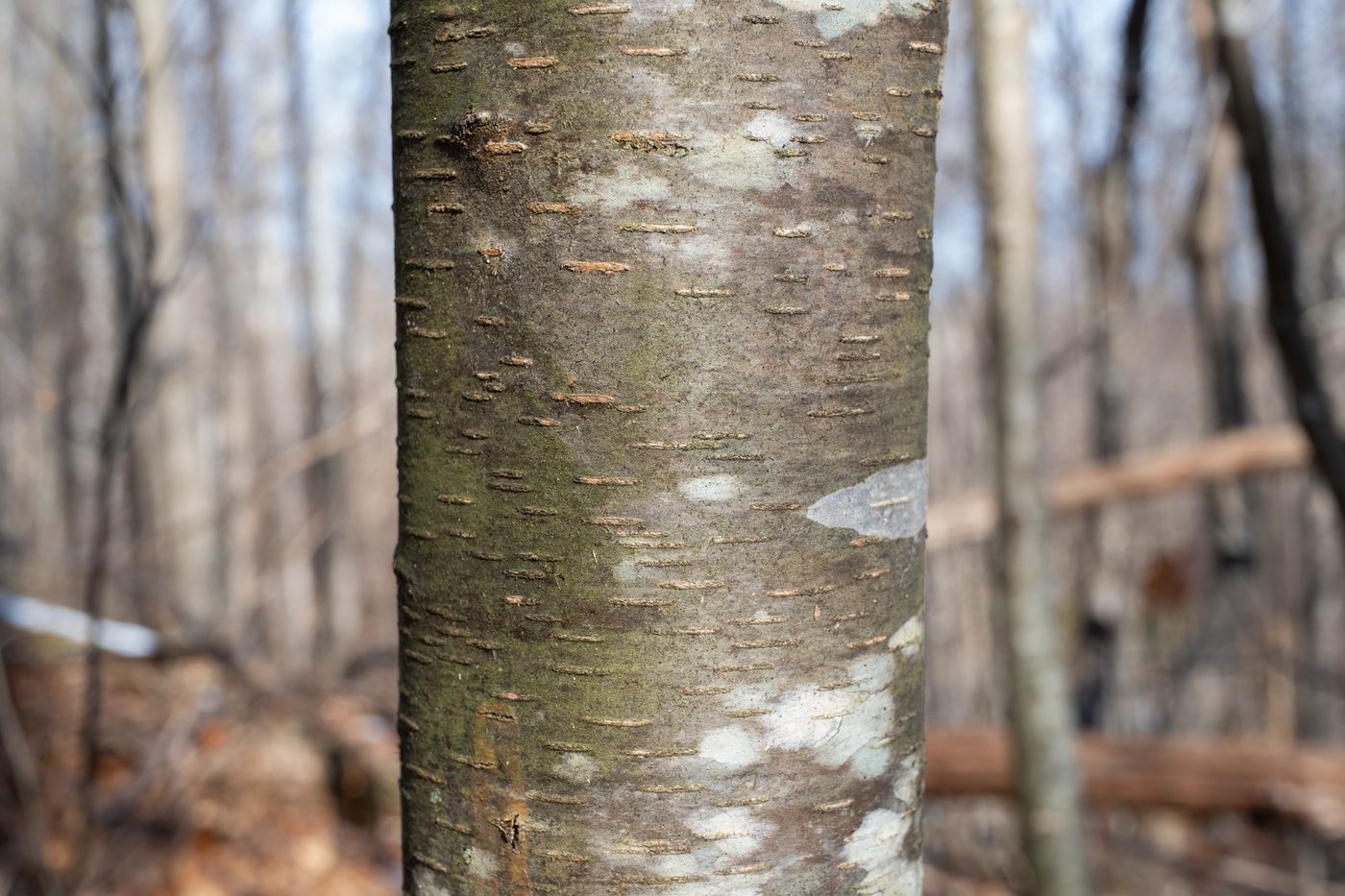
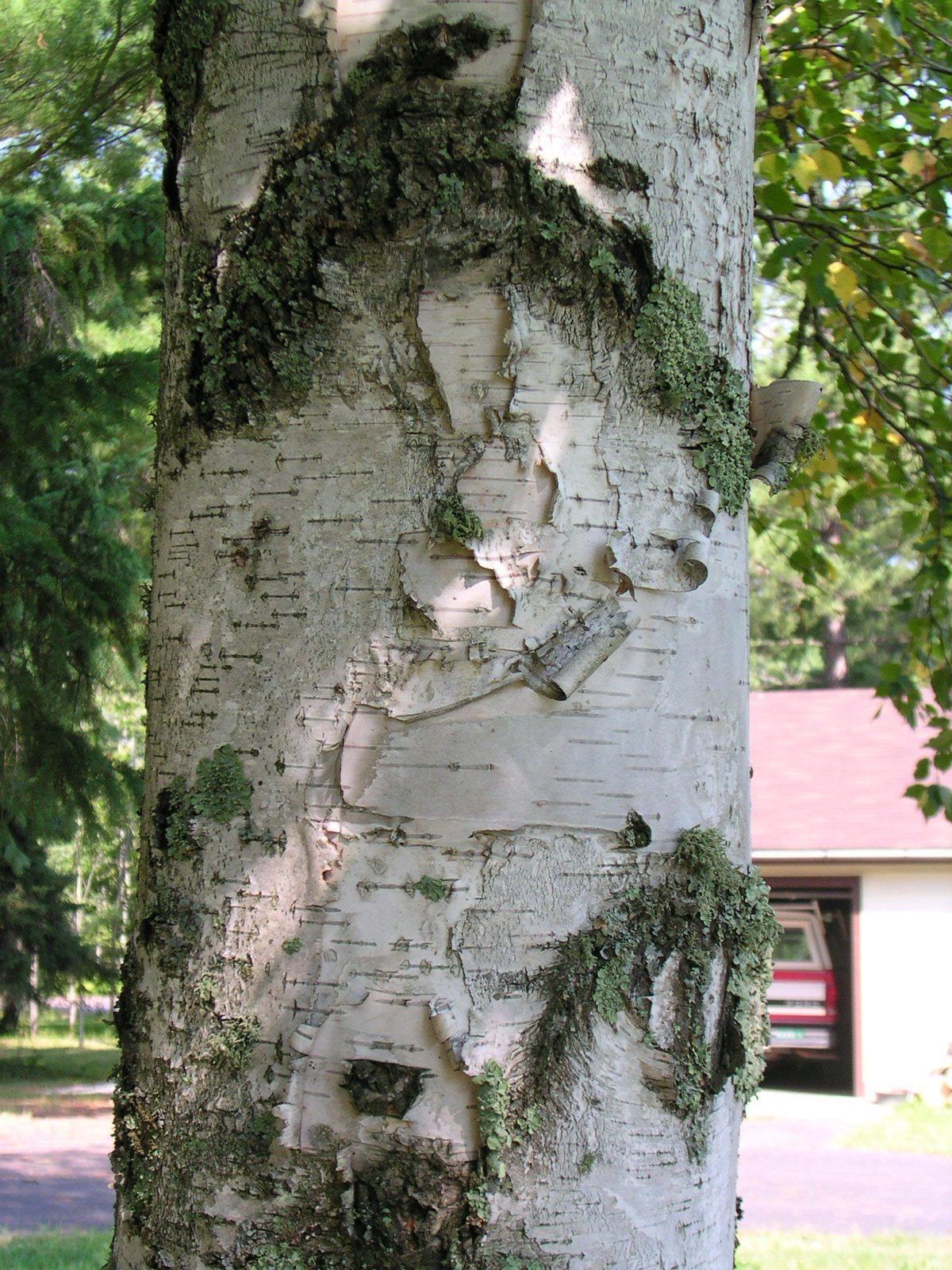
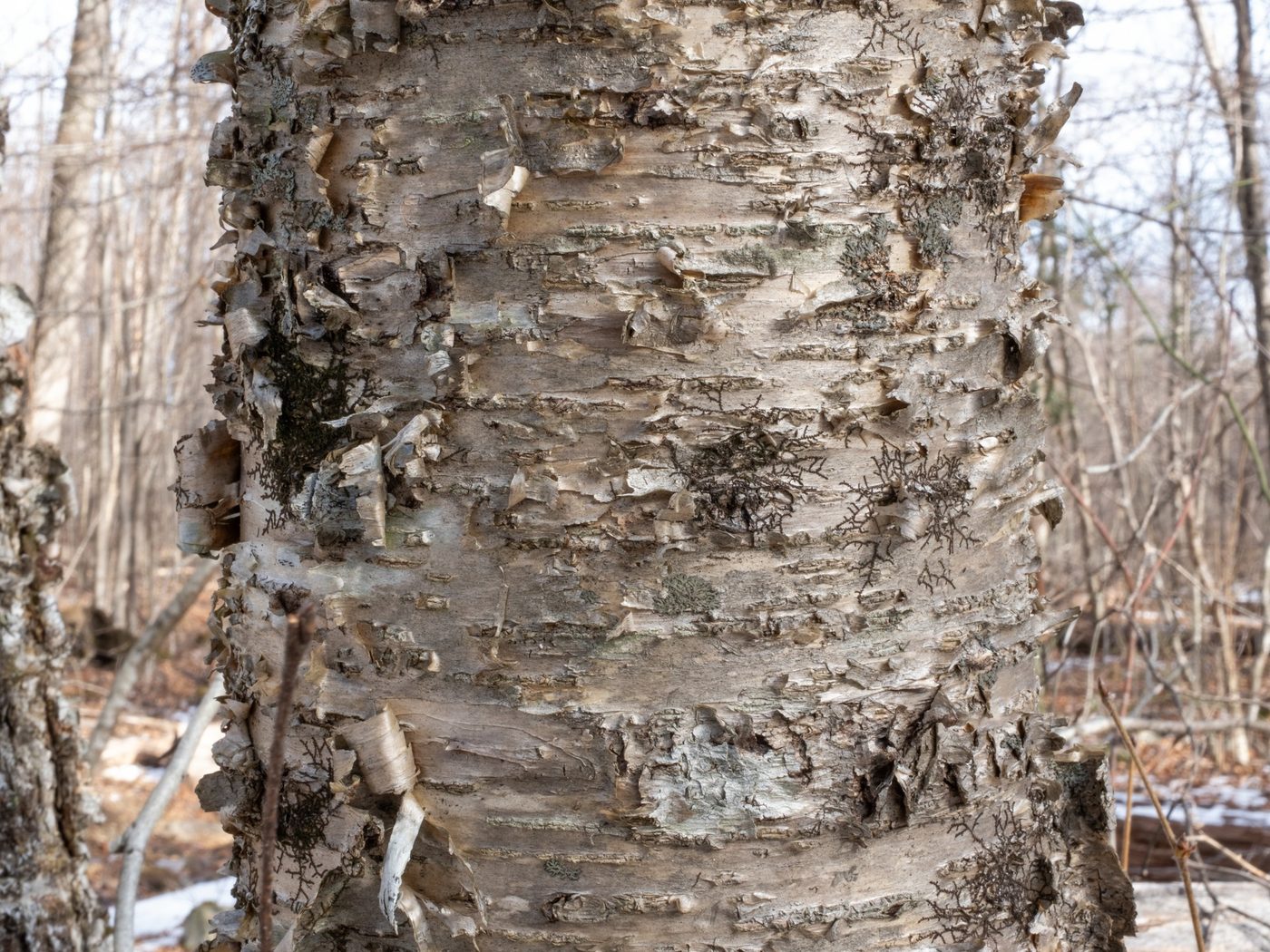
Yellow Birch
Betula alleghaniensis · Hardwood · North America
Properties
| Janka hardness | 1,260 lbf (5,604 N) |
|---|---|
| Average dried weight (est.) | 39 lb/ft³ (620 kg/m³) |
| Specific gravity | 0.62 |
| Modulus of rupture | 16,600 psi (114.5 MPa) |
| Modulus of elasticity | 2.01 million psi (13.86 GPa) |
| Crushing strength | 8,170 psi (56.3 MPa) |
| Shrinkage — radial | 7.3% |
| Shrinkage — tangential | 9.5% |
| Shrinkage — volumetric | 16.8% |
| Shrinkage T/R ratio | 1.3 |
Values at 12% moisture content, clear-wood averages. Source: USDA Forest Products Laboratory, Wood Handbook FPL-GTR-282 (2021), Table 5–3b p. 5–9; shrinkage Table 4–3 p. 4–8.
Yellow birch is a principal commercial birch of the Northeast, also growing down the Appalachians to northern Georgia, and it supplies most U.S. birch lumber and veneer together with sweet birch. The wood is heavy, hard, and strong, with good shock resistance.
Appearance & grain
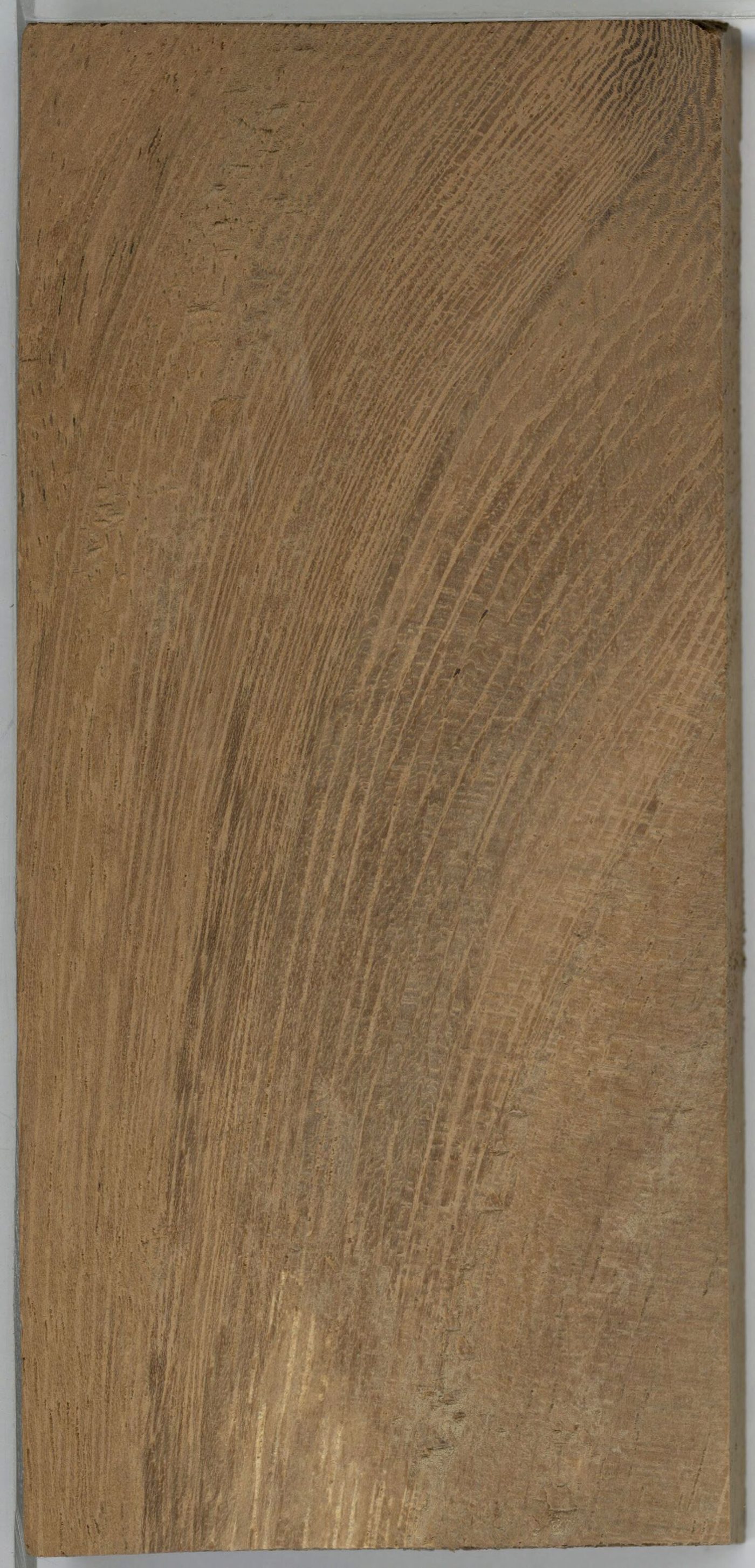
Yellow birch has white sapwood and light reddish-brown heartwood. Its texture is fine and uniform.
Workability
The birches are heavy, hard, strong woods with good shock resistance. They shrink considerably in drying, so stock needs careful seasoning.
Common uses
- Furniture
- Boxes
- Baskets
- Crates
- Woodenware
- Cooperage
- Interior woodwork
- Doors
- Veneer
Conservation: IUCN Red List: Least Concern (checked 2026-10-24).