Live Oak
Quercus virginiana · Hardwood · North America
Properties
| Average dried weight (est.) | 55 lb/ft³ (880 kg/m³) |
|---|---|
| Specific gravity | 0.88 |
| Modulus of rupture | 18,400 psi (126.9 MPa) |
| Modulus of elasticity | 1.98 million psi (13.65 GPa) |
| Crushing strength | 8,900 psi (61.4 MPa) |
| Shrinkage — radial | 6.6% |
| Shrinkage — tangential | 9.5% |
| Shrinkage — volumetric | 14.7% |
| Shrinkage T/R ratio | 1.4 |
Values at 12% moisture content, clear-wood averages. Source: USDA Forest Products Laboratory, Wood Handbook FPL-GTR-282 (2021), Table 5–3b p. 5–11; shrinkage Table 4–3 p. 4–8.
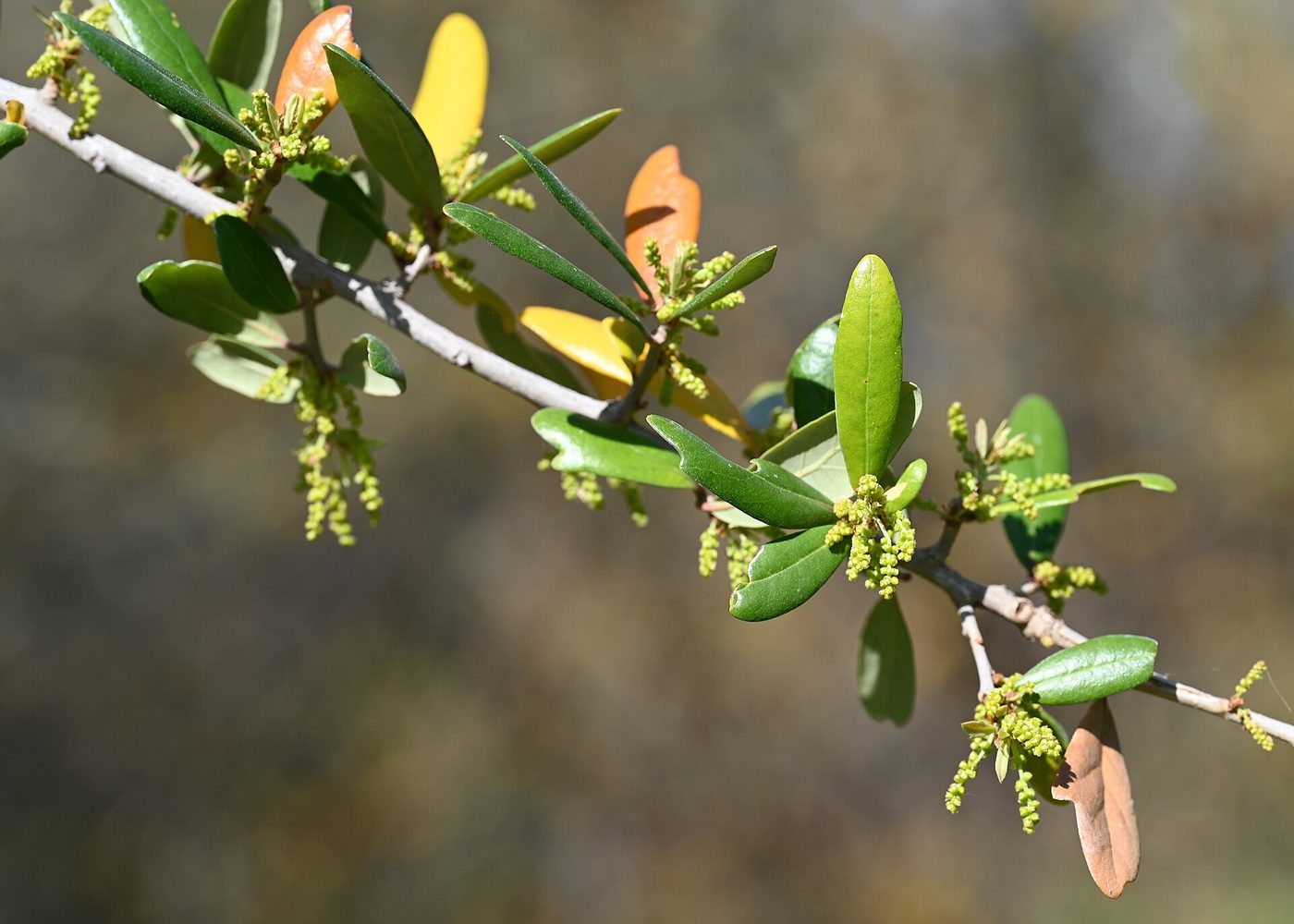
Live oak is the benchmark oak of the Handbook's tropical oak account: the tropical oaks are described as similar to it, and their strength values fall between white oak's and live oak's or equal live oak's. It was one of the main species used in building the U.S. Navy warship USS Constitution.
Appearance & grain
In heartwood color, texture, and grain, the tropical oaks are described as similar to the oaks of the United States, especially live oak. Live oak itself is exceptionally dense, with a dataset specific gravity of 0.88, the highest among the oaks.
Durability
Heartwood rated very resistant to decay fungi (rating stated for the tropical oaks, which the Handbook describes as similar to live oak).
Workability
Utilization of the tropical oaks is limited by difficulties in drying the wood. Live oak's dataset bending strength of 18,400 psi (at 0.88 specific gravity) puts it at the top of the oak strength range the Handbook describes.
Common uses
- Boat and ship construction
- Flooring
- Railroad crossties
- Mine timbers
- Tight cooperage
- Decorative veneers
Conservation: IUCN Red List: Least Concern (checked 2026-10-24).
Work with Live Oak
Similar woods
Photo: Krzysztof Ziarnek, Kenraiz · CC BY-SA 4.0 (source)
Property data: USDA Forest Products Laboratory, Wood Handbook — Wood as an Engineering Material, FPL-GTR-282 (2021).