Pecan
Carya illinoensis · Hardwood · North America
Properties
| Janka hardness | 1,820 lbf (8,095 N) |
|---|---|
| Average dried weight (est.) | 41 lb/ft³ (660 kg/m³) |
| Specific gravity | 0.66 |
| Modulus of rupture | 13,700 psi (94.5 MPa) |
| Modulus of elasticity | 1.73 million psi (11.93 GPa) |
| Crushing strength | 7,850 psi (54.1 MPa) |
| Shrinkage — radial | 4.9% |
| Shrinkage — tangential | 8.9% |
| Shrinkage — volumetric | 13.6% |
| Shrinkage T/R ratio | 1.8 |
Values at 12% moisture content, clear-wood averages. Source: USDA Forest Products Laboratory, Wood Handbook FPL-GTR-282 (2021), Table 5–3b p. 5–10; shrinkage Table 4–3 p. 4–8.
Pecan is the best-known species of the pecan hickory group, ranging from central Texas and Louisiana to Missouri and Indiana. Its heavy wood serves for tool and implement handles and flooring in higher grades, and for pallets in lower grades.
Appearance & grain
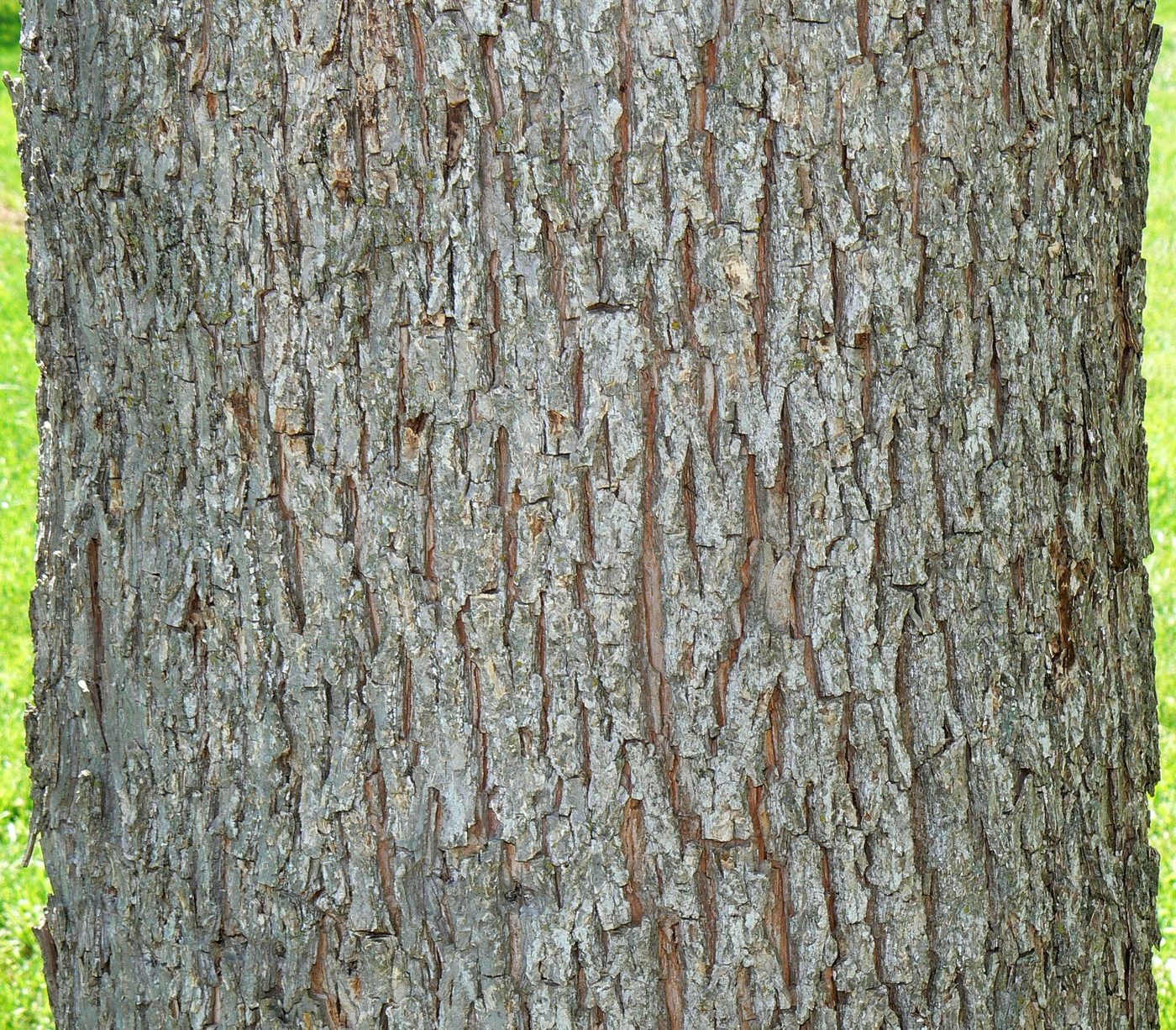
Pecan hickory sapwood is white or nearly white and relatively wide; the heartwood is somewhat darker.
Workability
The wood is heavy, and some pecan hickory has very high shrinkage in drying. Like the other hickories, it is a tough wood suited to demanding uses.
Common uses
- Tool handles
- Implement handles
- Flooring
- Pallets
Conservation: IUCN Red List: Least Concern (checked 2026-10-24).
Work with Pecan
Similar woods
Photo: MONGO · Public domain (source)
Property data: USDA Forest Products Laboratory, Wood Handbook — Wood as an Engineering Material, FPL-GTR-282 (2021).