Shagbark Hickory
Carya ovata · Hardwood · North America
Properties
| Janka hardness | 1,880 lbf (8,362 N) |
|---|---|
| Average dried weight (est.) | 45 lb/ft³ (720 kg/m³) |
| Specific gravity | 0.72 |
| Modulus of rupture | 20,200 psi (139.3 MPa) |
| Modulus of elasticity | 2.16 million psi (14.89 GPa) |
| Crushing strength | 9,210 psi (63.5 MPa) |
| Shrinkage — radial | 7.0% |
| Shrinkage — tangential | 10.5% |
| Shrinkage — volumetric | 16.7% |
| Shrinkage T/R ratio | 1.5 |
Values at 12% moisture content, clear-wood averages. Source: USDA Forest Products Laboratory, Wood Handbook FPL-GTR-282 (2021), Table 5–3b p. 5–10; shrinkage Table 4–3 p. 4–8.
Shagbark hickory is the flagship of the true hickories (specific gravity 0.72, Janka hardness 1,880 lbf) — exceptionally tough, heavy, hard, and strong, with bending strength of 20,200 psi that tops this directory's hardwoods. It is the classic wood for tool handles and anything else that must absorb shock without failing.
Appearance & grain
The sapwood is white and usually quite wide. The heartwood is reddish. As a true hickory, shagbark shares the group's plain, workmanlike appearance.
Workability
The Handbook emphasizes the true hickories' exceptional toughness rather than ease of working — this is dense, heavy wood that tools work hard to cut. It also shrinks considerably in drying, so seasoning needs care.
Common uses
- Tool handles
- Ladder rungs
- Athletic goods
- Agricultural implements
- Dowels
- Gymnasium apparatus
- Poles
- Furniture
- Pallets
- Smoking chips and sawdust for curing meat
Conservation: IUCN Red List: Least Concern (checked 2026-10-24).
Work with Shagbark Hickory
Similar woods
Related reading: Read our shagbark hickory lumber guide
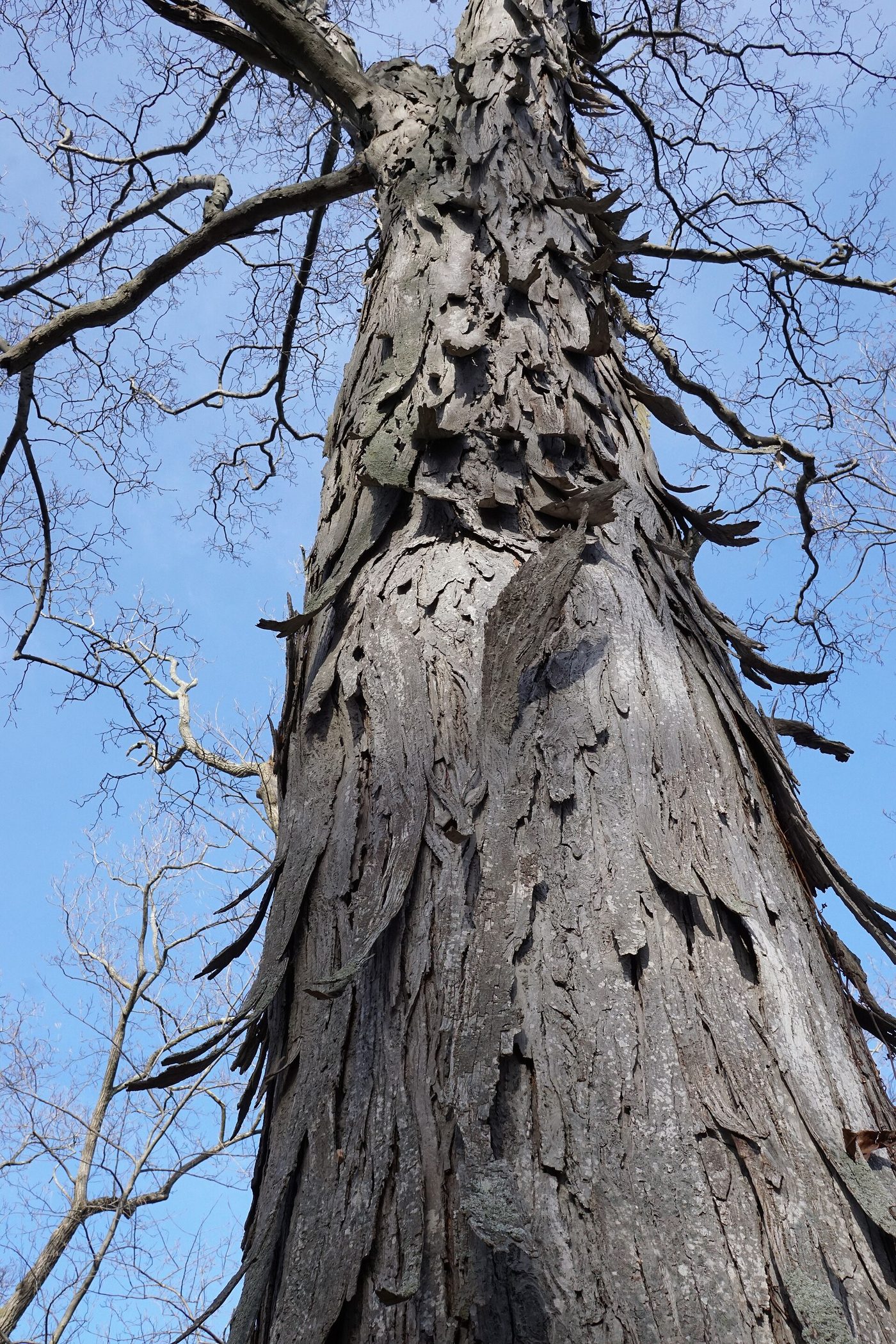
Photo: Plant Image Library · CC BY-SA 2.0 (source)
Property data: USDA Forest Products Laboratory, Wood Handbook — Wood as an Engineering Material, FPL-GTR-282 (2021).