Teak
Tectona grandis · Hardwood · Southeast Asia
Properties
| Janka hardness | 1,000 lbf (4,448 N) |
|---|---|
| Average dried weight (est.) | 34 lb/ft³ (550 kg/m³) |
| Specific gravity | 0.55 |
| Modulus of rupture | 14,600 psi (100.7 MPa) |
| Modulus of elasticity | 1.55 million psi (10.69 GPa) |
| Crushing strength | 8,410 psi (58.0 MPa) |
| Shrinkage — radial | 2.5% |
| Shrinkage — tangential | 5.8% |
| Shrinkage — volumetric | 7.0% |
| Shrinkage T/R ratio | 2.3 |
Values at 12% moisture content, clear-wood averages. Source: USDA Forest Products Laboratory, Wood Handbook FPL-GTR-282 (2021), Table 5-5b p. 5-25; shrinkage Table 4-4 p. 4-9.
Teak is the benchmark durable tropical hardwood (specific gravity 0.55, Janka hardness 1,000 lbf), prized for shipbuilding and outdoor furniture because it barely moves with moisture and shrugs off decay. The species is listed as Endangered on the IUCN Red List, and scarcity and cost limit its use.
Appearance & grain
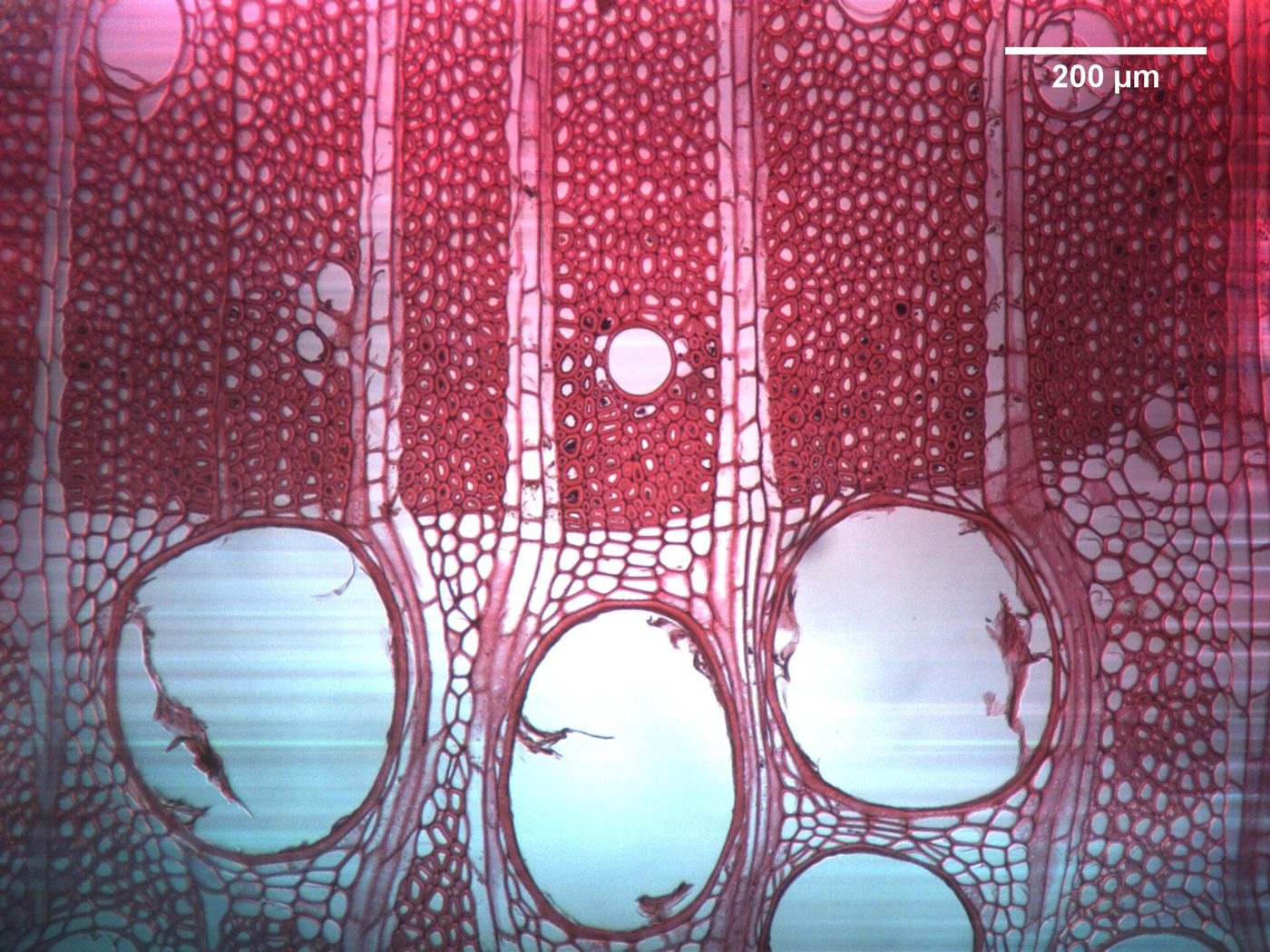
The heartwood is yellowish brown to dark golden brown, turning a rich brown with exposure. The texture is coarse and uneven, the structure ring-porous, and the grain usually straight. The wood has a distinctly oily feel to the touch.
Durability
The Handbook credits teak with a very high degree of natural durability — the property, together with its dimensional stability, that made it the classic shipbuilding and outdoor wood.
Workability
The Handbook says teak works with moderate ease, but the silica in the wood dulls cutting tools quickly. Finishing and gluing are satisfactory, although pretreatment of the oily surface may be needed for good bonding.
Common uses
- Shipbuilding
- Boats
- Tanks and vats
- Acid-resistant fixtures
- Furniture
- Flooring
- Decorative objects
- Decorative veneer
Conservation: IUCN Red List: Endangered (checked 2026-10-24).
Work with Teak
Similar woods
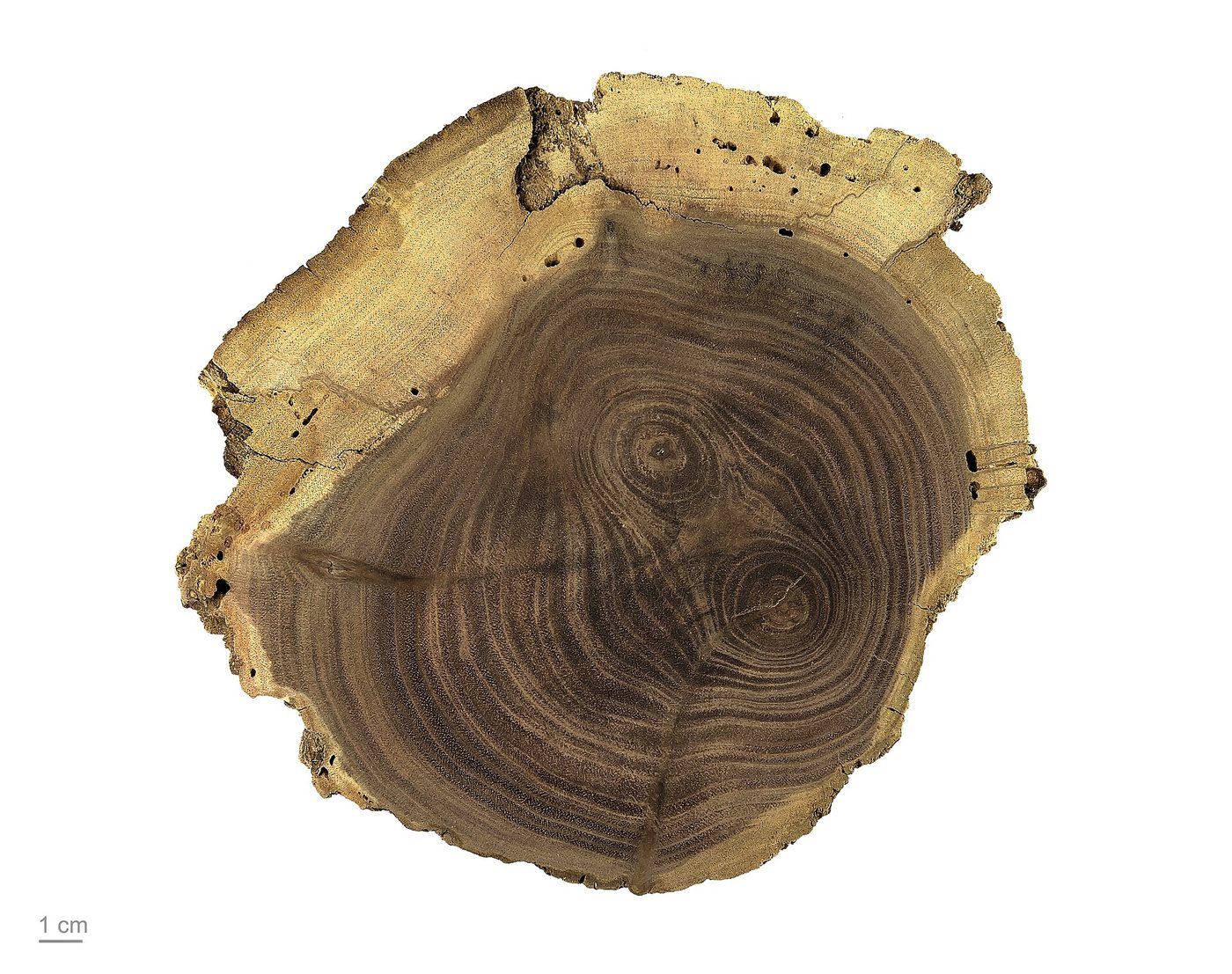
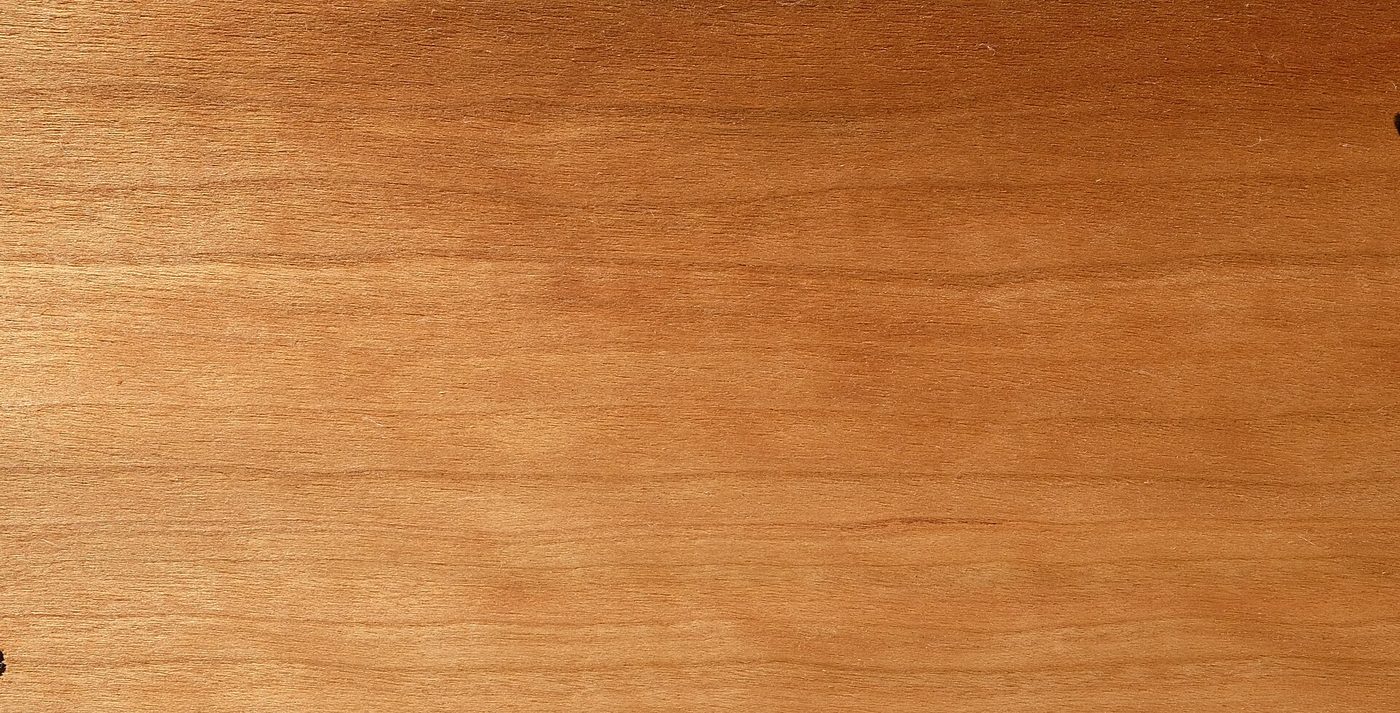
Photo: A woodperson · CC BY-SA 4.0 (source)
Property data: USDA Forest Products Laboratory, Wood Handbook — Wood as an Engineering Material, FPL-GTR-282 (2021).