Black Cherry
Prunus serotina · Hardwood · North America
Properties
| Janka hardness | 950 lbf (4,226 N) |
|---|---|
| Average dried weight (est.) | 31 lb/ft³ (500 kg/m³) |
| Specific gravity | 0.50 |
| Modulus of rupture | 12,300 psi (84.8 MPa) |
| Modulus of elasticity | 1.49 million psi (10.27 GPa) |
| Crushing strength | 7,110 psi (49.0 MPa) |
| Shrinkage — radial | 3.7% |
| Shrinkage — tangential | 7.1% |
| Shrinkage — volumetric | 11.5% |
| Shrinkage T/R ratio | 1.9 |
Values at 12% moisture content, clear-wood averages. Source: USDA Forest Products Laboratory, Wood Handbook FPL-GTR-282 (2021), Table 5–3b p. 5–9; shrinkage Table 4–3 p. 4–8.
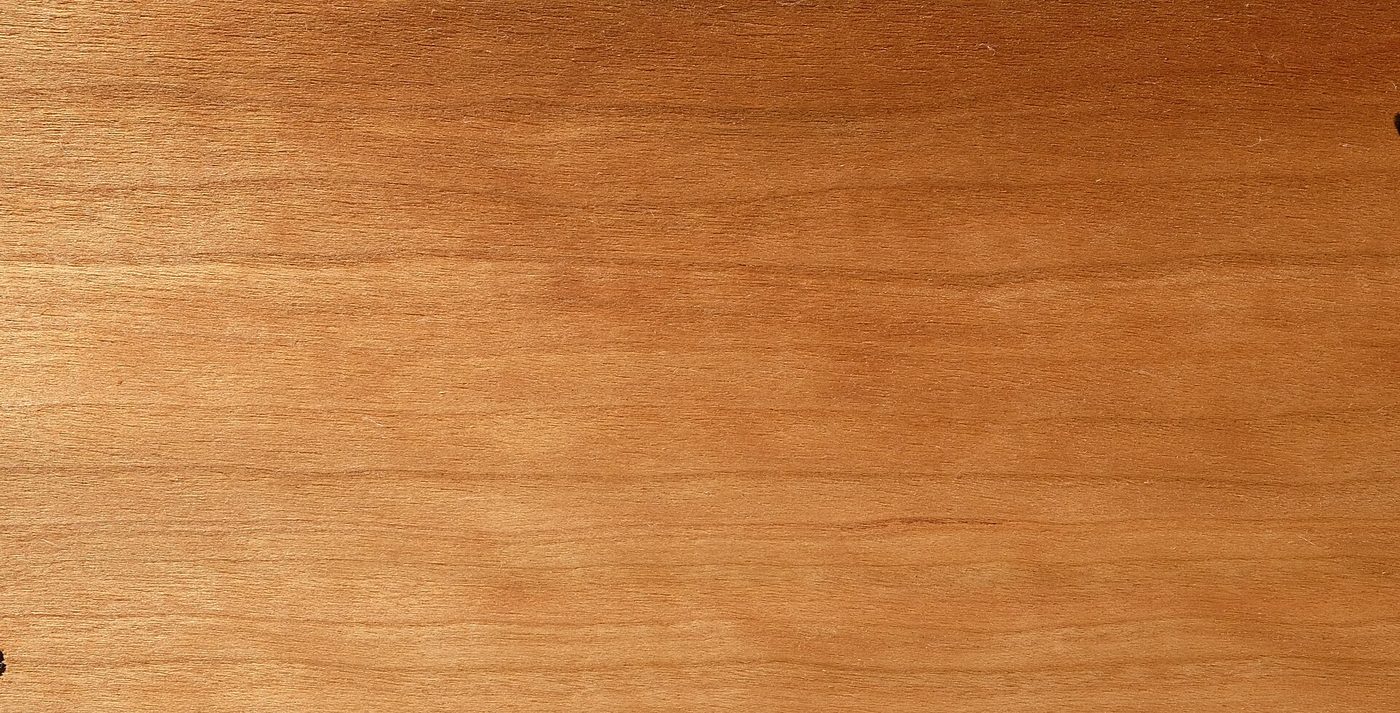
Black cherry is one of America's premier cabinet woods (specific gravity 0.50, Janka hardness 950 lbf), valued for its rich reddish-brown color and excellent machining behavior. Once dried it is notably stable, which is why it anchors so much fine furniture and architectural woodwork.
Appearance & grain
The heartwood ranges from light to dark reddish brown and has a distinctive luster. The sapwood is nearly white and, in old-growth trees, quite narrow. The texture is fairly uniform.
Workability
The Handbook credits black cherry with very good machining properties. Shrinkage in drying is moderately high, but once dry the wood is very dimensionally stable.
Common uses
- Furniture
- Fine veneer panels
- Architectural woodwork
- Burial caskets
- Woodenware
- Novelties
- Patterns
Conservation: IUCN Red List: Least Concern (checked 2026-10-24).
Work with Black Cherry
Similar woods
Related reading: Read our black cherry lumber guide
Photo: Philipp Zinger · CC BY-SA 4.0 (source)
Property data: USDA Forest Products Laboratory, Wood Handbook — Wood as an Engineering Material, FPL-GTR-282 (2021).